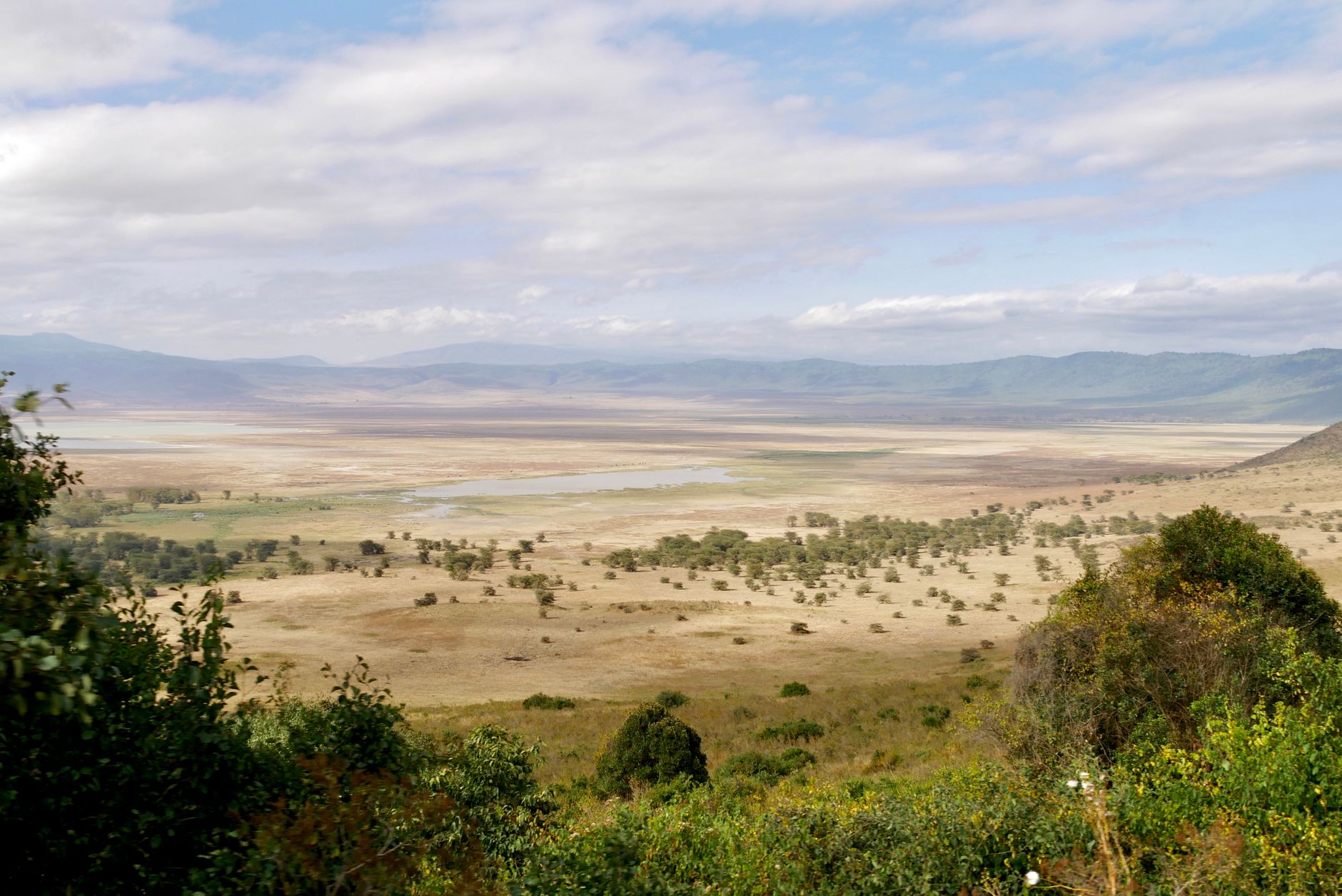


A crater lake fifteen minutes from Arusha
Lake Duluti fills an old volcanic crater in the coffee country between Arusha and Usa River, a short drive off the main highway to Moshi and Kilimanjaro International Airport. A ring of gazetted forest reserve surrounds the water, and because the lake has no real inlet or outlet, it sits mirror-still on most mornings — the kind of calm that makes it popular for photography as much as for the activity on offer.
What you actually do here
The main draw is a slow dugout-canoe paddle across the lake, usually with a local guide who knows where the fish eagles perch and where the malachite and pied kingfishers hunt from the reeds. A walking trail also circles the forested shoreline, roughly two hours at an easy pace, with blue monkeys and a long list of forest birds along the way. Neither activity is strenuous, which is exactly why Duluti works as a first or last outing on a trip — it asks nothing of a traveller who has just landed or is about to fly home.
Dugout canoe paddles with a local guide
Easy to combine
Because it sits in the middle of Arusha’s coffee belt, a Duluti morning is very often paired with a working coffee-estate tour nearby, following the cherry from the bush through pulping and drying to a cup at the end — a pleasant half-day that needs no early start and no long drive, and a good way to spend the day you land in Arusha before setting out for Tarangire or Lake Manyara the next morning.
What it looks like


Highlights, up close


Where it is
- Best time to visit Year-round
- Climate Mild highland climate year-round, sheltered by the surrounding forest.
In depth Landscape, wildlife, birds & seasons What you might see here, and when conditions are best.
Landscape & vegetation
Dense gazetted forest reserve ringing a still crater lake, with no real inlet or outlet.
What you might see
A seasonal reference guide, not a live sighting feed or a guarantee — wildlife moves. Tap or hover a ring for a quick note.
- Blue monkey Spotted on the large majority of game drives here.
- Bushbuck Depends on the time of year — ask about timing when you enquire.
Notable birds
African fish eagle ◆ Malachite kingfisher ◆ Pied kingfisher
Right now: this list is at its fullest. Resident species are here year-round, and this is also the window (roughly October to March) when migratory birds visiting from Europe and Asia add to the count.
Seasonal climate guide
Typical conditions across the Northern Circuit by season — a reference guide based on long-term patterns, not a live forecast.
A closer look
Before you travel What to carry, health precautions & emergency numbers Packing list, vaccinations, and who to call if you need help.
What to carry
- Neutral-coloured clothing (khaki, olive, brown) — avoid bright white, black and blue, which attract tsetse flies
- A warm layer or fleece — early-morning game drives and the Ngorongoro rim are cold even on the equator
- Wide-brimmed hat and polarised sunglasses
- High-SPF sunscreen and lip balm
- Insect repellent (DEET-based, for dusk and dawn)
- Binoculars — one pair per person makes a real difference
- A power bank and universal adapter (Tanzania uses UK-style Type G plugs)
- A soft-sided duffel bag rather than a hard suitcase, for light-aircraft and 4x4 luggage limits
- A basic personal first-aid kit and any personal medication in hand luggage
- Cash in US dollars (2013 or newer notes) for tips and small purchases
Health precautions
Malaria
Northern Tanzania is a malaria risk area. Speak to your doctor or a travel clinic about antimalarial medication well before you travel, and use insect repellent and cover up at dusk and dawn regardless.
Yellow fever certificate
Tanzania requires proof of yellow fever vaccination only if you are arriving from (or have transited more than 12 hours through) a country with risk of yellow fever transmission. If that applies to your routing, carry your International Certificate of Vaccination.
Altitude
The Ngorongoro Crater rim sits above 2,200 m and Kilimanjaro/Meru climbs go much higher — mild headaches or breathlessness are common at altitude. Drink plenty of water, ascend gradually where you can, and tell your guide if you feel unwell.
Sun and hydration
The equatorial sun is stronger than it feels in the open-sided safari vehicles. Drink more water than you think you need, and reapply sunscreen through the day.
Routine vaccinations and travel insurance
Make sure routine vaccinations are up to date, and take out travel insurance that explicitly covers emergency medical evacuation — the parks are remote, and evacuation by light aircraft is the standard response to a serious medical issue.
General guidance only, not personal medical advice — please confirm requirements and recommendations with your own doctor or a travel clinic before you go.
Emergency numbers
Worth saving to your phone before you travel.
- Chanua Africa Safaris (24/7 on safari) +255 702 345 991
- Tanzania Police (emergency) 112
- Ambulance 115
- AMREF Flying Doctors (air evacuation) +255 683 116 000