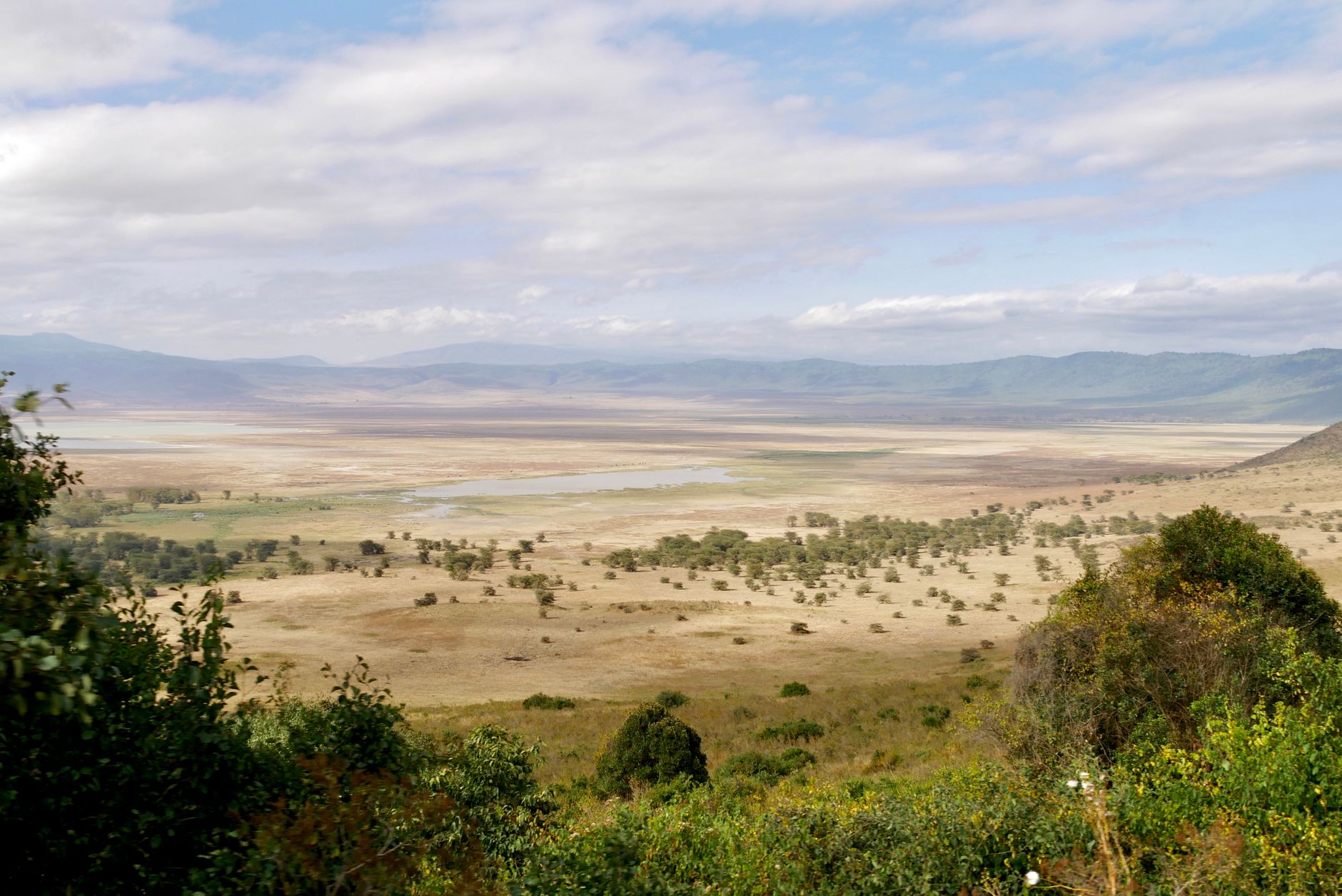

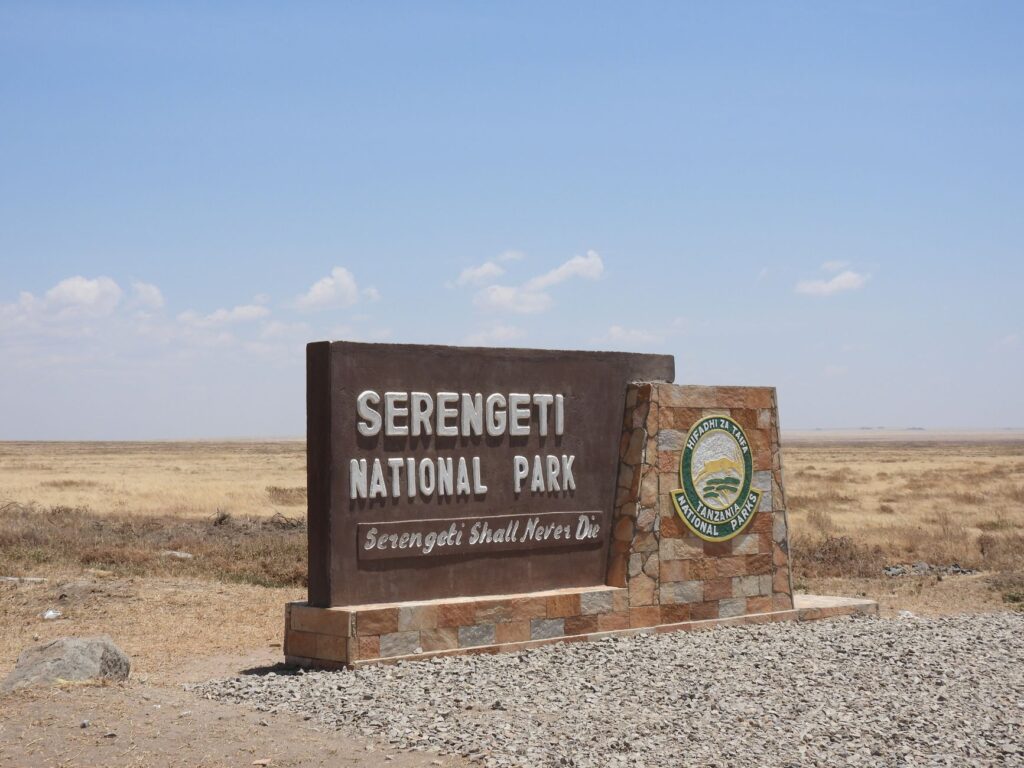
As Tanzania’s oldest national park, a UNESCO World Heritage site, and a global wonder, the Serengeti offers arguably the most scintillating game-viewing in Africa. It is world-famed for the Annual Migration, an ancient, instinctive pilgrimage when some six million hooves pound the open plains. Over a million wildebeest, joined by hundreds of thousands of zebras and gazelles, plunge through crocodile-infested waters in a relentless search for fresh grazing, replenishing their numbers in a brief population explosion of 8,000 calves daily.
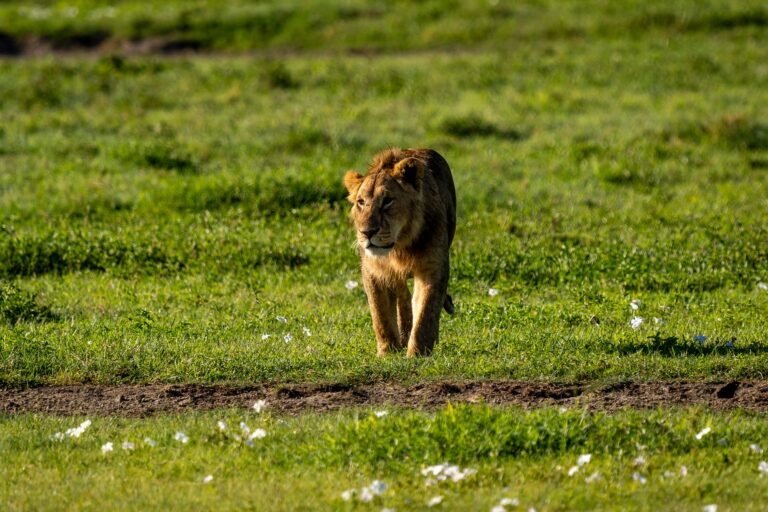
Even when the migration passes, this vast wilderness teems with life. Golden-maned lion prides feast on abundant grazers, solitary leopards haunt the acacia-lined Seronera River, and cheetahs prowl the southeastern plains. Beyond these famous predators, the liberating sense of space reveals a thriving ecosystem: vibrant Agama lizards darting across granite kopjes, over 500 bird species soaring through the sky, and changing seasons that transform sunburnt savannah into an endless green carpet flecked with wildflowers.
Spanning 14,763 square kilometres, Serengeti is 335km from Arusha, stretching north to Kenya and extending west toward the shores of Lake Victoria. To experience the legendary wildebeest migration firsthand, the best time to visit is between December and July, whereas the dry months from June to October offer the best conditions for predator sightings. Beyond our game drives, your itinerary can also be enriched with extraordinary experiences, including luxury hot air balloon safaris at dawn, intimate guided walking safaris, and unforgettable bush dinners under the stars. Remember just ask and we will organise.
Read on More about this place
The plain that runs on forever
At 14,763 square kilometres, the Serengeti is Tanzania’s third-largest national park and the anchor of the entire Northern Circuit — roughly the size of Northern Ireland, protected since 1940 and inscribed as a UNESCO World Heritage Site in 1981. Its name comes from the Maasai word siringet, “the place where the land runs on forever,” and from the open plains in the south it is not an exaggeration: short grass runs unbroken to the horizon in every direction, interrupted only by granite kopjes rising like islands out of the grass. The wider Serengeti–Mara ecosystem, spanning into Kenya’s Maasai Mara, covers some 30,000 square kilometres and supports the largest concentration of plains game left on earth.
The Great Migration, month by month
Over 1.5 million wildebeest and around 250,000 zebra move through the Serengeti in a roughly clockwise loop dictated entirely by rainfall and grass, not by any fixed calendar — which is why honest operators talk in probabilities, not guarantees. Calving concentrates on the short-grass plains in the south, around the Ndutu area straddling the Serengeti and Ngorongoro Conservation Area boundary, from roughly January to March, when several thousand calves are born daily and predator action is correspondingly intense. From April to June the herds drift northwest through the Western Corridor and its Grumeti River crossings. Between roughly July and October they push north toward the Mara River, where the crossings — crocodile-filled, chaotic, and the single most-photographed event in African wildlife — concentrate around the Kogatende area. By November the rains pull the herds south again, closing the loop.
Africa's largest lion population
Five regions, one park
Central Serengeti, around Seronera, holds resident wildlife year-round regardless of where the migration sits, and is usually the strongest choice for a first safari or a short visit: the Seronera River sustains game through the dry months when the rest of the park empties out, and the surrounding kopjes are reliable for lion and leopard. The park also holds Africa’s largest lion population, along with strong resident numbers of leopard, cheetah, elephant and buffalo, and more than 500 recorded bird species. Western Corridor, Northern (Kogatende/Mara), Southern (Ndutu) and Eastern Serengeti each have a different peak season tied to the migration’s movement, which is why the honest answer to “when should I go” is always “which part of the migration do you want to see,” not a single best month.
How it connects to the rest of the circuit
Most visitors reach the Serengeti overland from Ngorongoro, entering through Naabi Hill Gate as the highland forest opens onto the plains, though flights into Seronera, Kogatende or other airstrips can convert a driving day into game-viewing time on shorter trips. It anchors nearly every itinerary we run, from the fast-paced 3-Day Serengeti Express to the full 8-Day Full Northern Circuit, and pairs naturally on the calendar with a dedicated calving-season safari in the green months or a river-crossing itinerary when the herds are north.
At a glance Facts, season & highlights The essentials, and what makes this place.
Tanzania
The endless plains and the greatest wildlife migration on earth.
Heading south again
The short rains begin and the herds turn back south across the eastern and central Serengeti, retracing the loop toward next season's calving grounds.
Highlights, up close
Where it is
- Best time to visit Year-round; river crossings July to October, calving January to March
- Climate Hot and dusty through the June–October dry season; the short rains (Nov–Dec) and long rains (Mar–May) green the plains fast.
In depth Landscape, wildlife, birds & seasons What you might see here, and when conditions are best.
Landscape & vegetation
Short-grass plains in the south, acacia savanna and woodland through the centre and west, and riverine forest along the Mara in the north.
What you might see
A seasonal reference guide, not a live sighting feed or a guarantee — wildlife moves. Tap or hover a ring for a quick note.
- Lion Near-certain on most visits to this area.
- Cheetah Near-certain on most visits to this area.
- Spotted hyena Near-certain on most visits to this area.
- Leopard Spotted on the large majority of game drives here.
- Zebra Near-certain on most visits to this area.
- Wildebeest Tracks the migration: the big concentrations are roughly Dec–Mar (calving, south) and Jul–Sep (Mara river crossings, north).
- Elephant Spotted on the large majority of game drives here.
Notable birds
Kori bustard ◆ Secretary bird ◆ Lilac-breasted roller ◆ Southern ground hornbill ◆ Ostrich
Right now: this list is at its fullest. Resident species are here year-round, and this is also the window (roughly October to March) when migratory birds visiting from Europe and Asia add to the count.
Seasonal climate guide
Typical conditions across the Northern Circuit by season — a reference guide based on long-term patterns, not a live forecast.
In pictures Photo gallery
Nearby Treks & safaris that come here
Safaris that visit here


Before you travel What to carry, health precautions & emergency numbers Packing list, vaccinations, and who to call if you need help.
What to carry
- Neutral-coloured clothing (khaki, olive, brown) — avoid bright white, black and blue, which attract tsetse flies
- A warm layer or fleece — early-morning game drives and the Ngorongoro rim are cold even on the equator
- Wide-brimmed hat and polarised sunglasses
- High-SPF sunscreen and lip balm
- Insect repellent (DEET-based, for dusk and dawn)
- Binoculars — one pair per person makes a real difference
- A power bank and universal adapter (Tanzania uses UK-style Type G plugs)
- A soft-sided duffel bag rather than a hard suitcase, for light-aircraft and 4x4 luggage limits
- A basic personal first-aid kit and any personal medication in hand luggage
- Cash in US dollars (2013 or newer notes) for tips and small purchases
Health precautions
Malaria
Northern Tanzania is a malaria risk area. Speak to your doctor or a travel clinic about antimalarial medication well before you travel, and use insect repellent and cover up at dusk and dawn regardless.
Yellow fever certificate
Tanzania requires proof of yellow fever vaccination only if you are arriving from (or have transited more than 12 hours through) a country with risk of yellow fever transmission. If that applies to your routing, carry your International Certificate of Vaccination.
Altitude
The Ngorongoro Crater rim sits above 2,200 m and Kilimanjaro/Meru climbs go much higher — mild headaches or breathlessness are common at altitude. Drink plenty of water, ascend gradually where you can, and tell your guide if you feel unwell.
Sun and hydration
The equatorial sun is stronger than it feels in the open-sided safari vehicles. Drink more water than you think you need, and reapply sunscreen through the day.
Routine vaccinations and travel insurance
Make sure routine vaccinations are up to date, and take out travel insurance that explicitly covers emergency medical evacuation — the parks are remote, and evacuation by light aircraft is the standard response to a serious medical issue.
General guidance only, not personal medical advice — please confirm requirements and recommendations with your own doctor or a travel clinic before you go.
Emergency numbers
Worth saving to your phone before you travel.
- Chanua Africa Safaris (24/7 on safari) +255 702 345 991
- Tanzania Police (emergency) 112
- Ambulance 115
- AMREF Flying Doctors (air evacuation) +255 683 116 000