
As the closest national park to Arusha, this often-overlooked gem offers an incredible diversity of wildlife and landscapes within just a few hours’ drive. Your journey begins in a lush mountain forest, home to colourful turacos, blue monkeys, and the acrobatic black-and-white colobus monkey, a rare sight elsewhere on the northern safari circuit. In the heart of this forest, the dramatic Ngurdoto Crater encloses a marshy floor dotted with grazing buffalo and warthog herds.
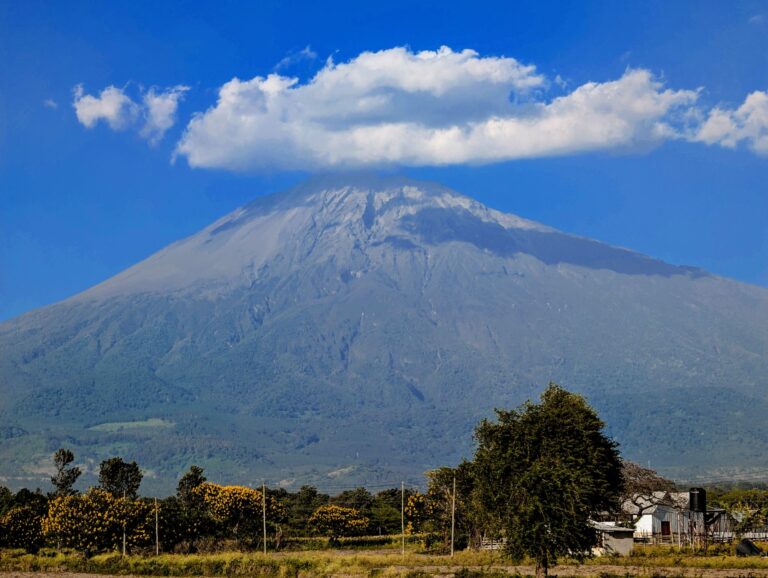
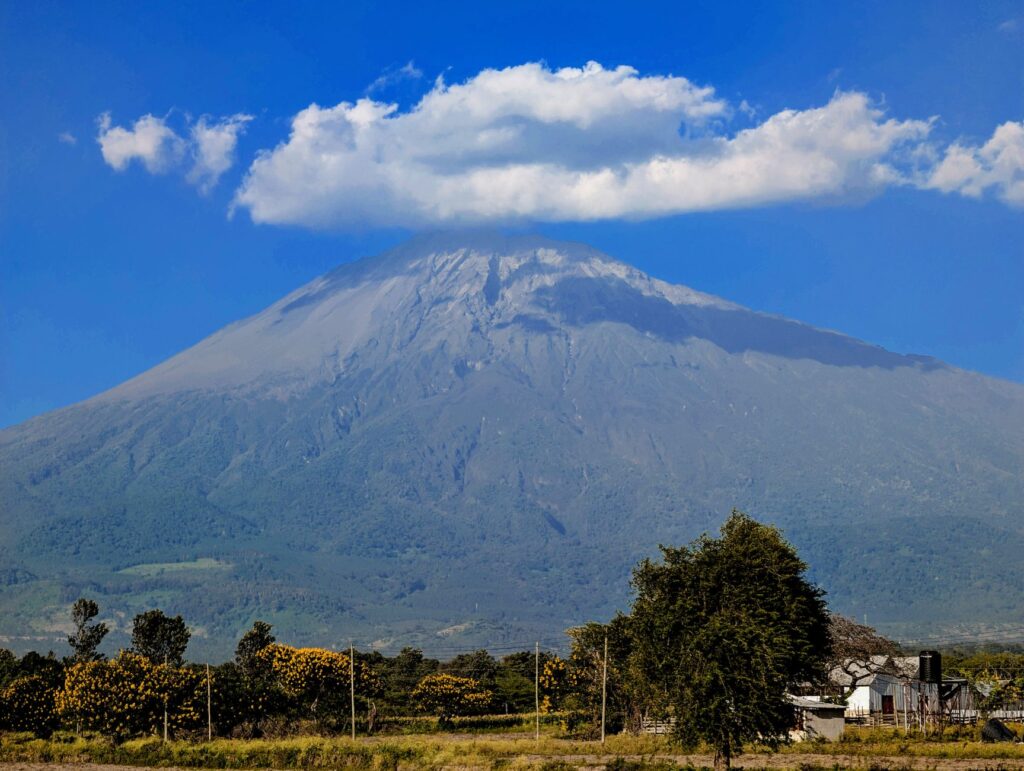
Further north, the beautiful Momela Lakes glow in shifting hues of blue and green, frequently tinged pink by thousands of flamingos alongside elegant waterbucks, giraffes, zebras, and tiny dik-diks. While large predators are rare, the park is dominated by the majestic Mount Meru, Africa’s fifth-highest peak at 4,566 metres. A rewarding trek up its slopes leads through wooded savannah and giant lobelias where, at dawn, the clouds often clear to reveal stunning, sunrise-kissed views of its famous neighbour, Mount Kilimanjaro, just 50km away.
Read on More about this place
A small park with four landscapes in one
At just 137 square kilometres, Arusha National Park is one of the smallest parks on the Northern Circuit, but it packs in more scenery per kilometre than almost anywhere else in Tanzania. In a single morning you can move from open savanna grazed by giraffe and buffalo, through montane rainforest thick with black-and-white colobus, up onto the ash cone of an extinct volcano, and finish beside an alkaline lake turned pink by thousands of lesser flamingos. It sits roughly 25 kilometres — about 45 minutes — northeast of Arusha, which makes it the easiest national park in the country to combine with a single free day rather than a full safari.
Giraffe country, and the Momella Lakes
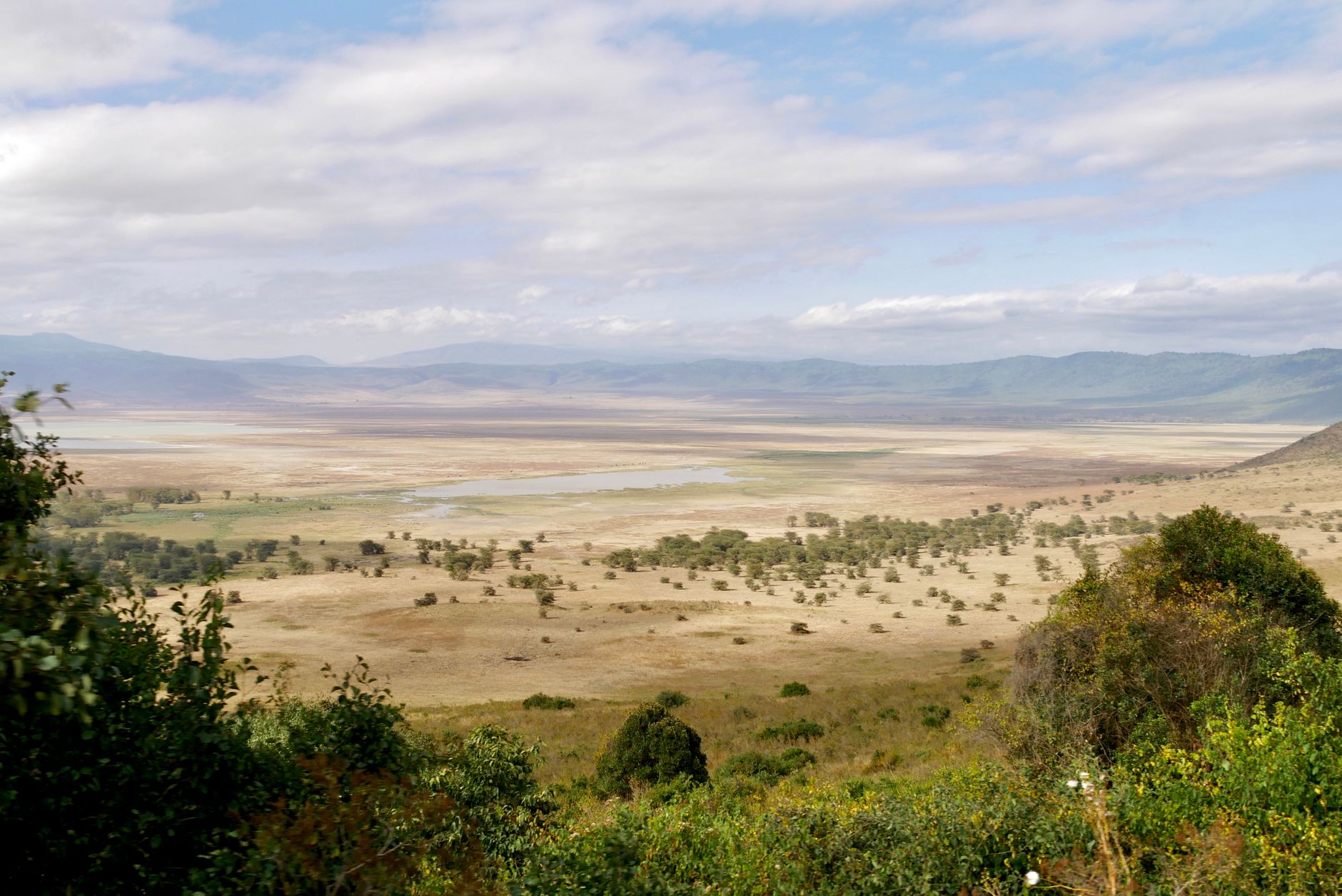
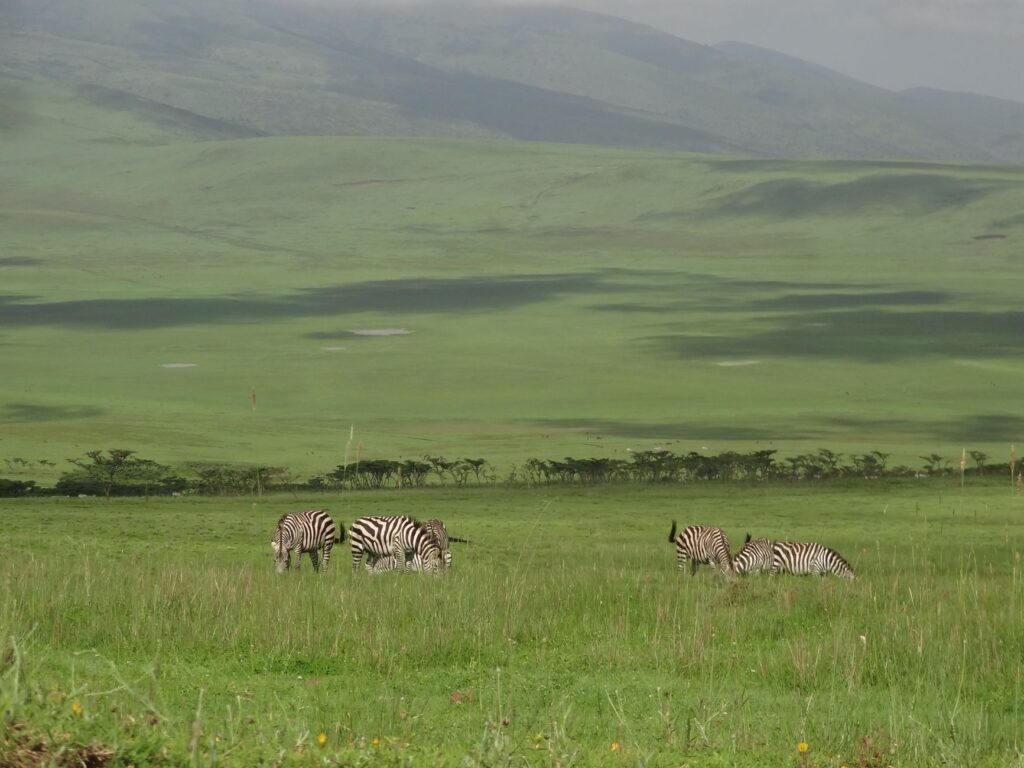
The park holds one of the highest densities of giraffe anywhere on the continent — several hundred animals in an area a fraction of the size of the parks further west — alongside zebra, warthog and Cape buffalo on the open ground around Ngurdoto Crater, sometimes called the “little Ngorongoro” for its steep forested walls and swamp-filled floor, though vehicles stay on the rim and never descend into it. To the north, the seven shallow Momella Lakes vary in colour from lake to lake depending on their algae and mineral content, and their shallows draw flamingo, pelican and a long list of waterbirds against a backdrop of Mount Meru.
Momella Lakes and flamingos
One of the few parks you can walk in
Most Tanzanian national parks restrict visitors to vehicles, but Arusha National Park is a rare exception: guided walking safaris with an armed ranger are permitted across much of the lower park, and canoeing on the Momella Lakes is offered as well — a genuinely different way to close in on buffalo and giraffe at the waterline. The park is also the starting point for treks up Mount Meru, Tanzania’s second-highest peak at 4,566 metres, a four-day climb that serves many people as acclimatisation before an attempt on Kilimanjaro and, on a clear day from the upper slopes, offers one of the best views of Kilimanjaro itself.
Why it is usually a half-day, not a full safari
Because it sits so close to Arusha and covers so little ground, most visitors treat it as a morning or afternoon addition rather than a standalone safari — either on arrival before heading out to Tarangire and the rest of the circuit, or as a gentle final outing before flying home. Predator numbers are low compared with the Serengeti or Ngorongoro, and that is rather the point: this is a park for walking, canoeing and giraffe, not for big cats.
At a glance Facts, season & highlights The essentials, and what makes this place.
Tanzania
Mount Meru, pink-flamingo lakes, and one of the few parks you can walk in.
What it looks like
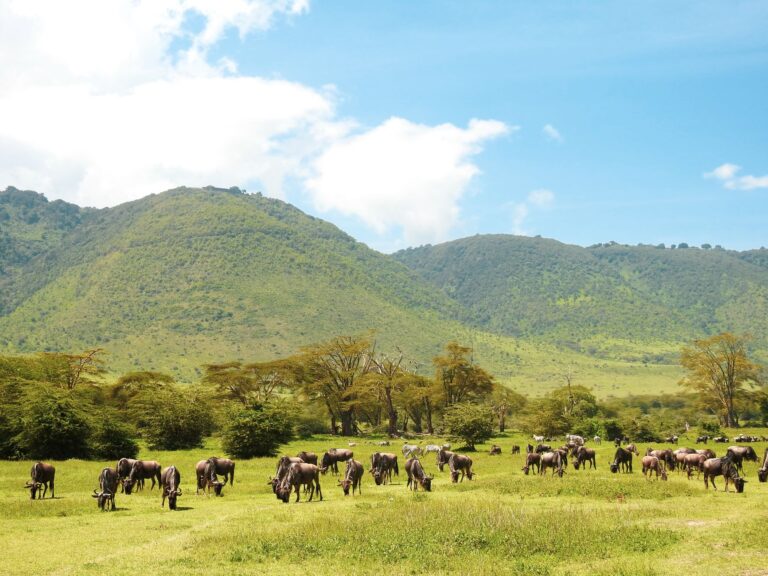
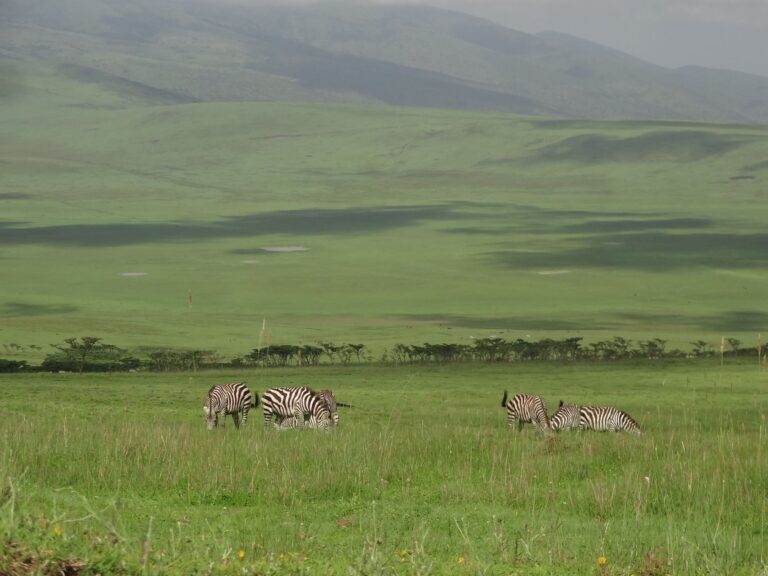
Highlights, up close
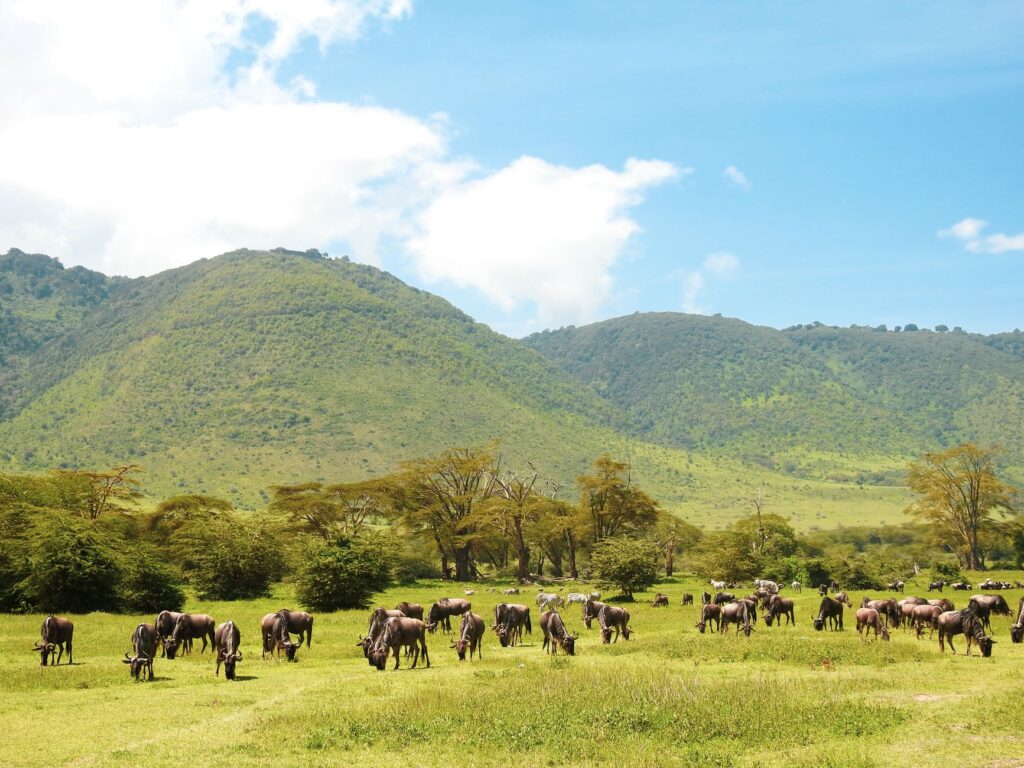
Where it is
- Best time to visit June to October and January to February
- Climate Wetter and cooler than the plains thanks to Meru's slopes — a light waterproof is worth carrying even in the dry season.