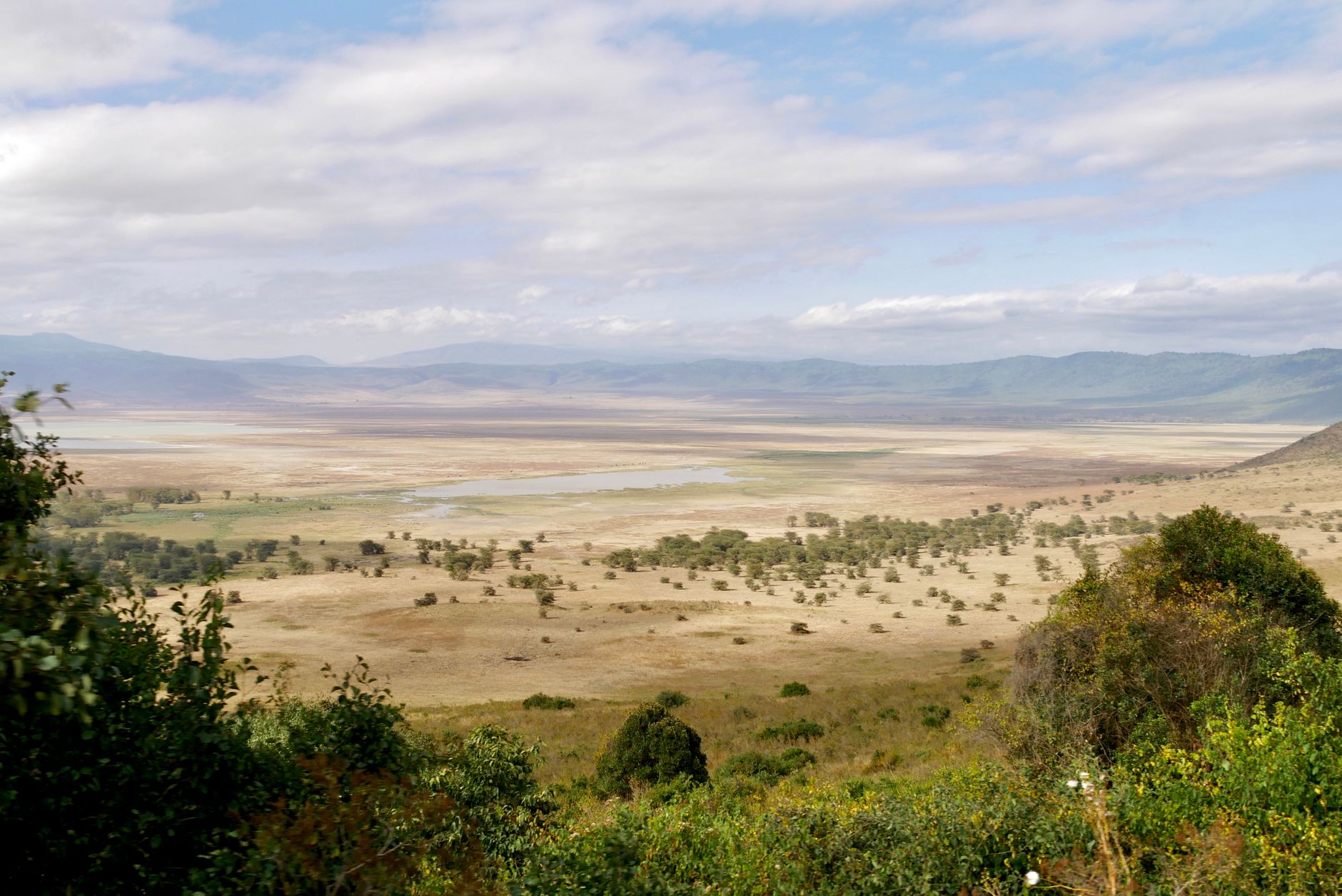

Situated in northern Tanzania near the Kenyan border, Lake Natron is a unique, shallow salt-lake fed by the Southern Ewaso Ng’iro River and mineral-rich hot springs. High evaporation rates in this arid region leave behind dense concentrations of sodium carbonate, raising water temperatures up to 50°C and creating a highly alkaline environment. This distinctive ecosystem is globally recognized as a protected Ramsar Wetland of International Importance.
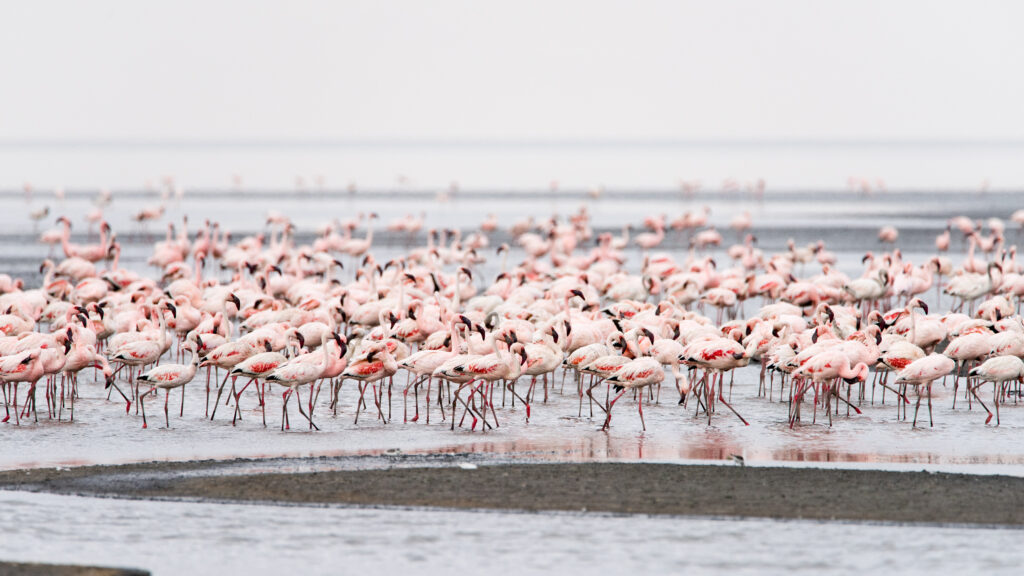
While the lake’s conditions are extreme, it serves as an indispensable ecological haven: it is the only regular breeding ground in East Africa for the Lesser Flamingo. Millions of these “near threatened” birds depend entirely on this specialized habitat to breed and feed on native blue-green algae, creating a most remarkable avian spectacle.
Read on More about this place
The Rift Valley’s harshest, most important lake
Lake Natron lies in the far north of Tanzania near the Kenyan border, stretching some 56 kilometres long and 22 wide across the floor of the Gregory Rift — the most remote and least visited of the Northern Circuit’s signature landscapes. It is punishingly alkaline, fed by hot springs and volcanic runoff that push its pH close to that of ammonia, and its shallow water can exceed 40°C in places. Almost nothing survives in it: a handful of endemic fish and salt-loving cyanobacteria that, en masse, stain the water everything from orange to deep blood-red, which is why aerial photographs of Natron look almost otherworldly.
Why the world’s flamingos need a lake this hostile
That same hostility is precisely what makes Natron irreplaceable. It is the only regular breeding site in East Africa for the lesser flamingo, and an estimated 75 percent of the world’s lesser flamingo population — up to 2.5 million birds in strong years — hatches on its exposed soda islands. The birds gather to nest between roughly August and October; their thick, leathery legs and specially adapted bills let them filter cyanobacteria from water that would damage almost any other animal, and the caustic mud that keeps predators away is what keeps the colony safe. It is one of the most significant bird breeding sites anywhere on the planet, and one most safari visitors never see.
Ol Doinyo Lengai overnight volcano climb
Ol Doinyo Lengai, the Mountain of God
Rising directly above the lake is Ol Doinyo Lengai, whose Maasai name means “Mountain of God” and which remains an active site of Maasai pilgrimage and worship. It is East Africa’s only currently active volcano and, geologically, one of a kind: the only volcano on earth erupting natrocarbonatite lava, a strange, low-temperature flow that looks black rather than glowing red and turns chalky white within hours of contact with air — the reason the summit often appears dusted with snow that is not snow at all. Climbers who take on the overnight ascent, starting around midnight to summit by sunrise before the heat sets in, are rewarded with a view straight down onto the red flats of Natron below.
Getting there, and what else is nearby
Lake Natron is genuinely remote — the roughest, most adventurous corner of the Northern Circuit, reached on rough roads from either Mto wa Mbu or the Ngorongoro highlands — and it rewards travellers with time to spare rather than a tight schedule. The Ngare Sero waterfall gorge, a short walk and wade through a narrow canyon, and a set of preserved hominin footprints near Engare Sero add further interest beyond the lake and volcano themselves. It features on our 8-Day Serengeti Migration & Lake Natron itinerary and as a dedicated add-on for travellers who want the Northern Circuit’s wilder, less-visited edge alongside the standard parks.
At a glance Facts, season & highlights The essentials, and what makes this place.
Tanzania
A caustic soda lake where nearly every lesser flamingo in East Africa is born.
Highlights, up close
Where it is
- Best time to visit June to October; flamingo breeding concentrates in the wetter months
- Climate One of the hottest, driest corners of the Northern Circuit — the Rift floor here regularly exceeds 40°C.