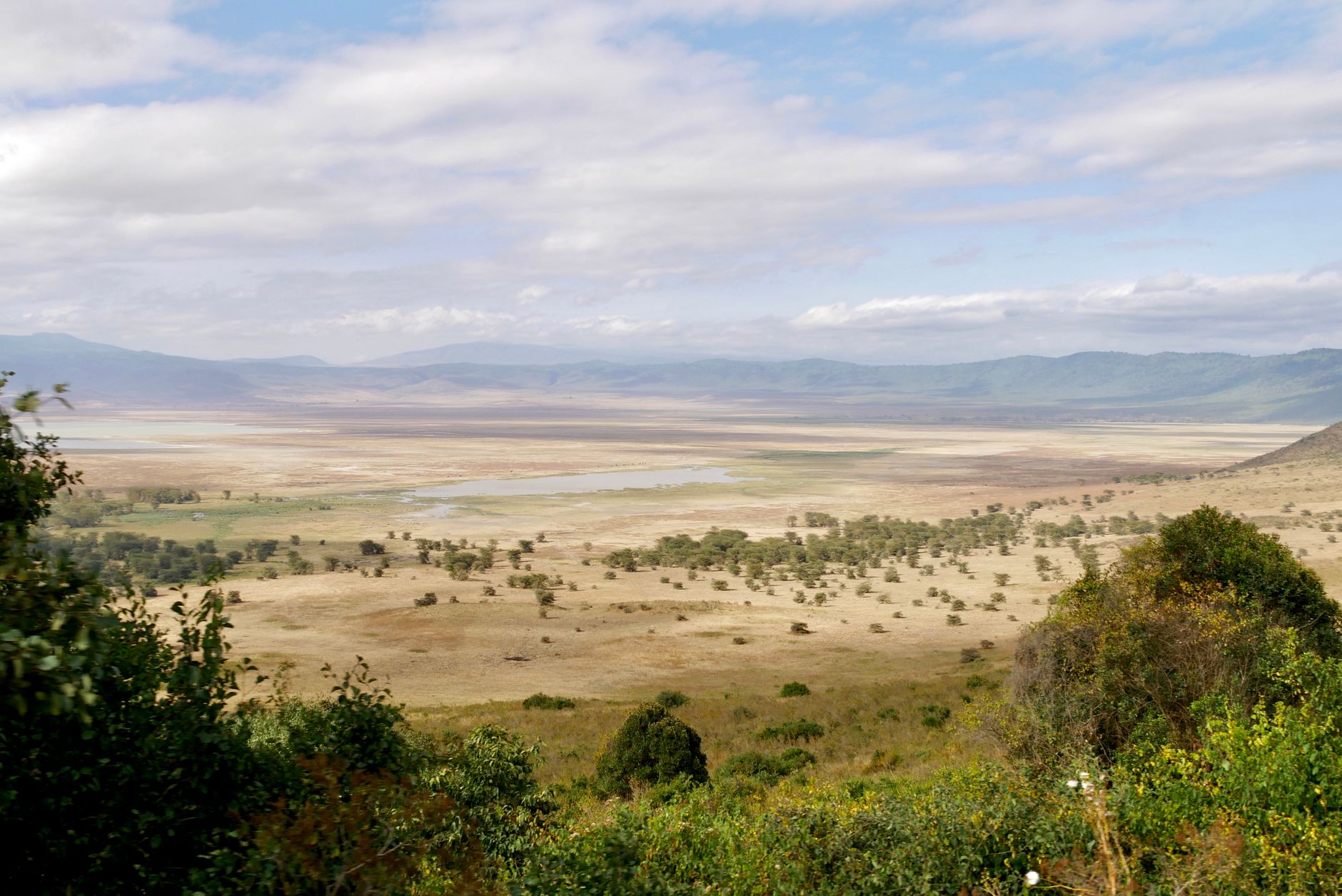


Nestled in the eastern Serengeti, Olduvai Gorge is one of the world’s premier archaeological sites. Globally recognized as the “Cradle of Mankind,” this steep ravine within the Great East African Rift Valley offers a profound window into human evolution.
The site earned international recognition through the excavations of Drs Louis and Mary Leakey, who in 1959, unearthed hominin fossils dating back nearly two million years.
Conveniently located between the Ngorongoro Crater and the Serengeti, this geo-historical masterpiece fits perfectly into any northern circuit itinerary. Visitors can explore the rugged landscape alongside an official local guide and browse a curated on-site museum showcasing these historic fossil discoveries. It can easily be added to your itinerary, by request.
Read on More about this place
The most important thirty-mile ravine in human history
Olduvai Gorge — more accurately Oldupai, after the wild sisal plant the Maasai call by that name, though the older spelling has stuck in general use — is a steep-sided ravine roughly 30 miles long and up to 90 metres deep, cutting through sediment layers that record close to two million years of geological and human history. It sits on the eastern edge of the Serengeti plains within the Ngorongoro Conservation Area, and every layer exposed in its walls represents a different era, each one carefully dated using the volcanic ash bands deposited by nearby eruptions — the reason Olduvai became one of the most precisely dated fossil sites on earth.
The Leakeys, and the skull that changed everything
Louis and Mary Leakey worked this gorge for over three decades with limited funding and little scientific recognition, until the morning in 1959 when Mary discovered a robust hominin skull nicknamed “Nutcracker Man” for its huge molars and jaw — formally classified as Paranthropus boisei, or Zinjanthropus. The find brought Olduvai international attention and secured the funding that let the Leakeys continue. The following year the team uncovered fossils of a more gracile hominin alongside stone tools older than any found before: Homo habilis, “handy man,” the earliest confirmed member of our own genus, dated to roughly 1.75 to 2 million years old. The Oldowan stone tools found alongside it — simple, deliberately chipped pebbles — are the oldest confirmed human-made technology on earth.
Homo habilis and the oldest confirmed stone tools on earth
Laetoli, and the footprints of our ancestors
Forty-five kilometres south of the gorge, at a site called Laetoli, Mary Leakey’s team found something even more striking in 1978: a 27-metre trackway of footprints left by three individuals walking upright across a layer of damp volcanic ash roughly 3.6 million years ago. Almost certainly Australopithecus afarensis — the same species as the famous “Lucy” skeleton found in Ethiopia — the Laetoli footprints remain the oldest undisputed evidence of habitual bipedalism, the trait that set the human lineage apart, anywhere in the world. Casts of the footprints, alongside the original Zinjanthropus skull and Homo habilis fossils, are displayed in the small on-site museum.
A stop, not a full day
For most travellers Olduvai is a well-placed pause on the long drive between the Ngorongoro Crater and the Serengeti plains — the museum and viewpoint over the gorge take perhaps an hour, enough time to understand why a dusty ravine in the middle of the safari route is treated as seriously as any national park. It features on our 5-Day Northern Circuit Classic and most longer Northern Circuit itineraries as a natural break in the day’s drive.
At a glance Facts, season & highlights The essentials, and what makes this place.
Tanzania
The 'Cradle of Mankind' on the edge of the Serengeti plains.
Highlights, up close
Where it is
- Best time to visit Year-round; driest June to October
- Climate Hot, dry and dusty for most of the year, typical of the open Serengeti plains it borders.