Skip to content
Tanzania Official

Arusha National Park

Mount Meru, pink-flamingo lakes, and one of the few parks you can walk in.

As the closest national park to Arusha, this often-overlooked gem offers an incredible diversity of wildlife and landscapes within just a few hours’ drive. Your journey begins in a lush mountain forest, home to colourful turacos, blue monkeys, and the acrobatic black-and-white colobus monkey, a rare sight elsewhere on the northern safari circuit. In the heart of this forest, the dramatic Ngurdoto Crater encloses a marshy floor dotted with grazing buffalo and warthog herds.

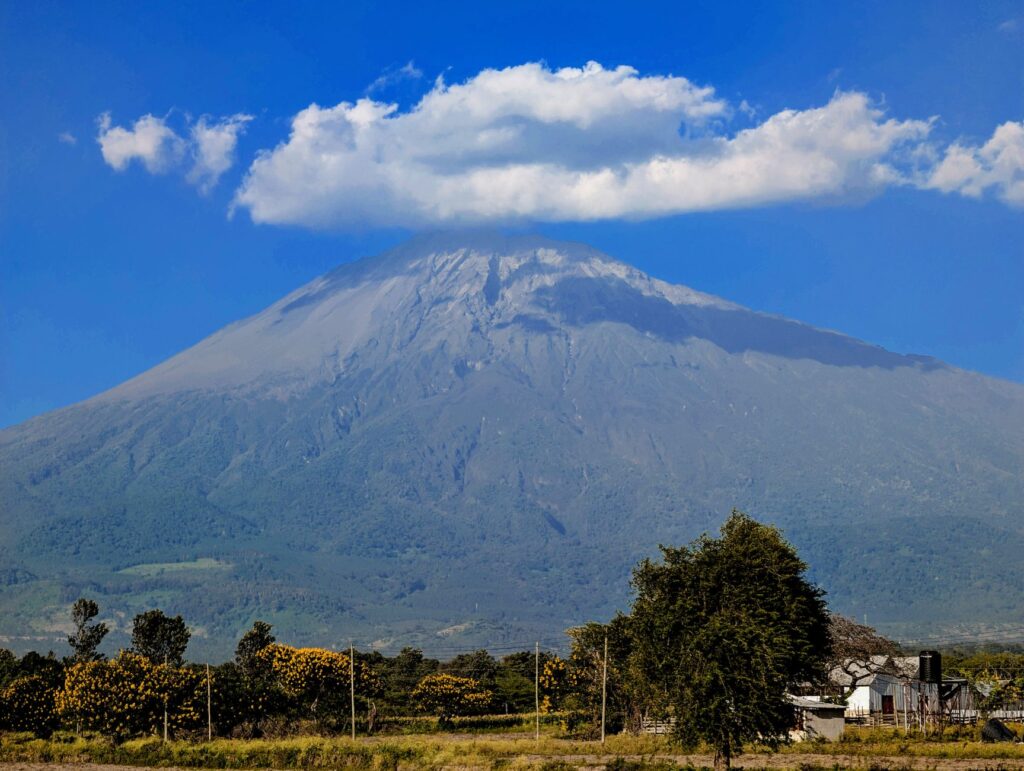
Further north, the beautiful Momela Lakes glow in shifting hues of blue and green, frequently tinged pink by thousands of flamingos alongside elegant waterbucks, giraffes, zebras, and tiny dik-diks. While large predators are rare, the park is dominated by the majestic Mount Meru, Africa’s fifth-highest peak at 4,566 metres. A rewarding trek up its slopes leads through wooded savannah and giant lobelias where, at dawn, the clouds often clear to reveal stunning, sunrise-kissed views of its famous neighbour, Mount Kilimanjaro, just 50km away.

A small park with four landscapes in one

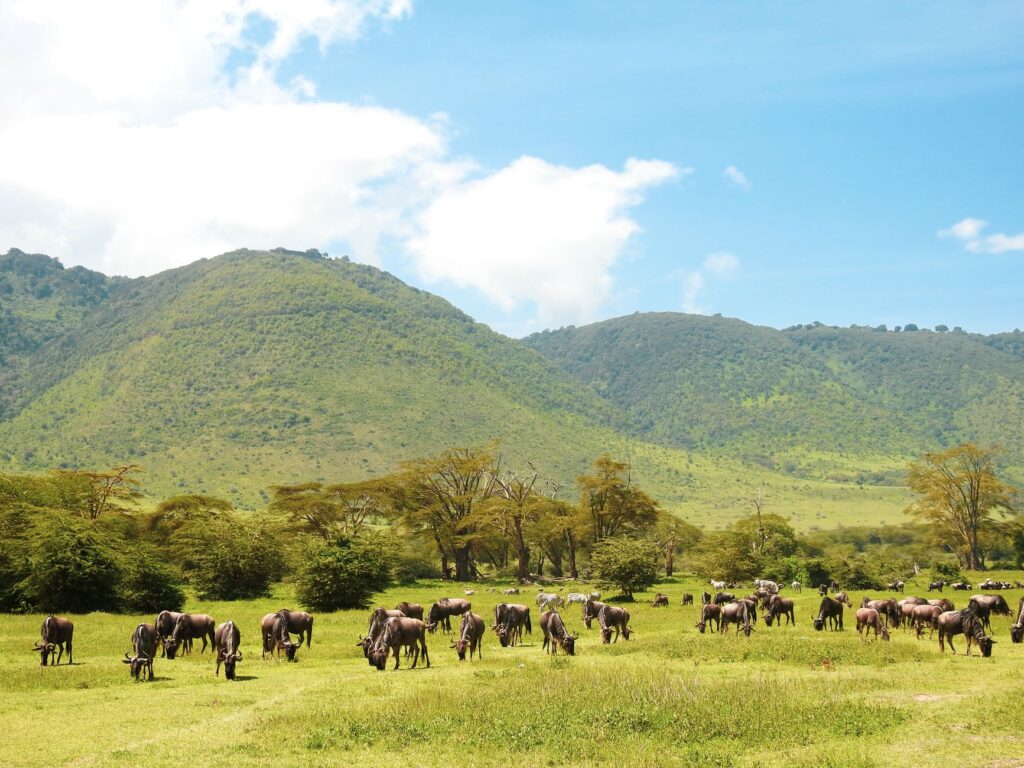
At just 137 square kilometres, Arusha National Park is one of the smallest parks on the Northern Circuit, but it packs in more scenery per kilometre than almost anywhere else in Tanzania. In a single morning you can move from open savanna grazed by giraffe and buffalo, through montane rainforest thick with black-and-white colobus, up onto the ash cone of an extinct volcano, and finish beside an alkaline lake turned pink by thousands of lesser flamingos. It sits roughly 25 kilometres — about 45 minutes — northeast of Arusha, which makes it the easiest national park in the country to combine with a single free day rather than a full safari.
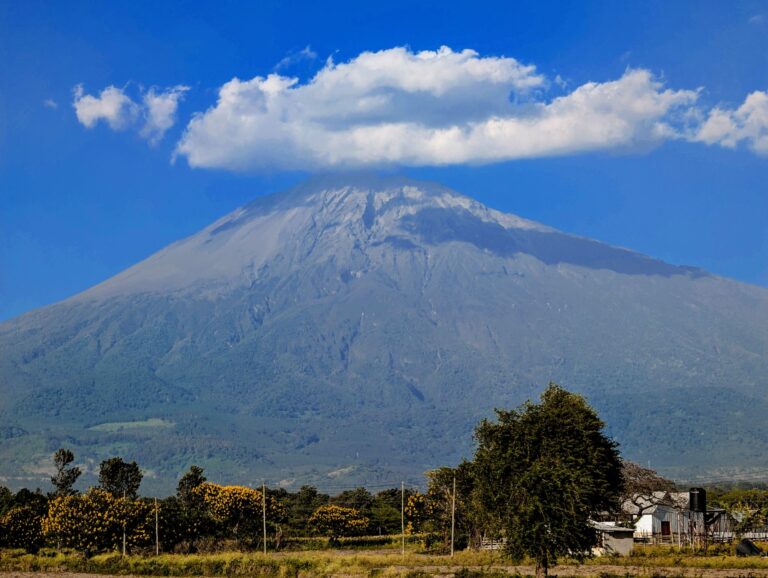
Photo by mn str on Pexels

Giraffe country, and the Momella Lakes

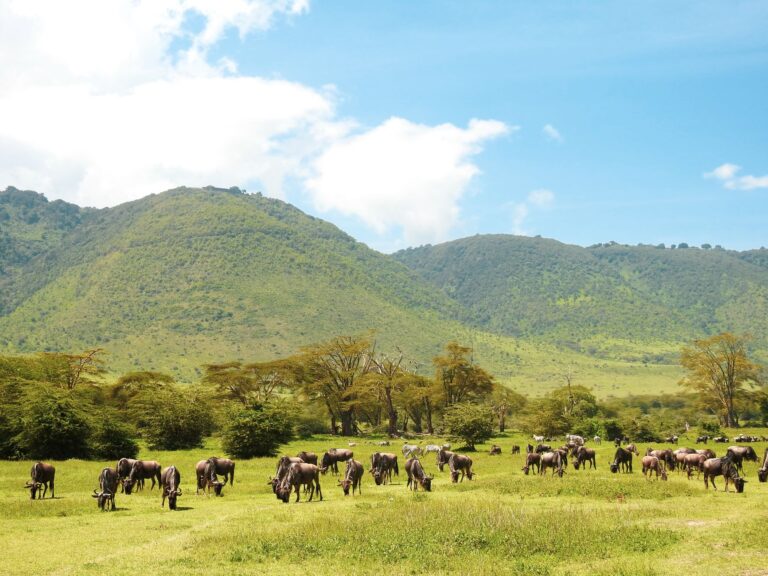
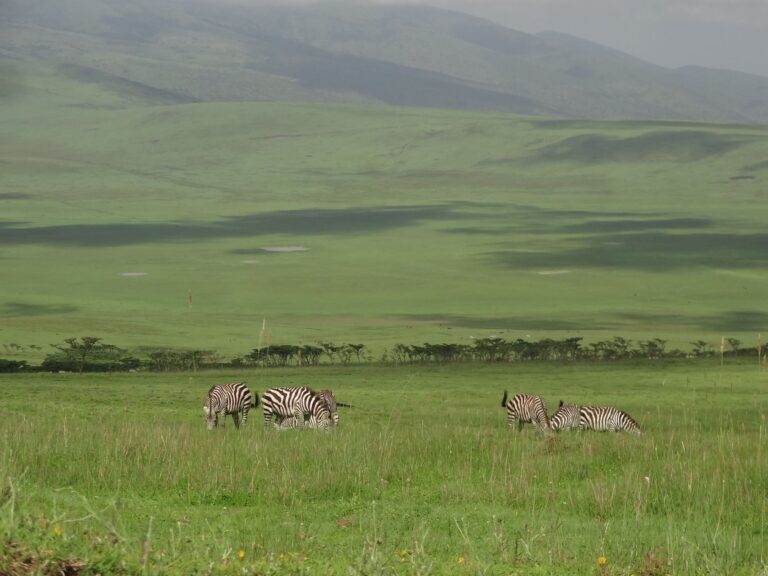
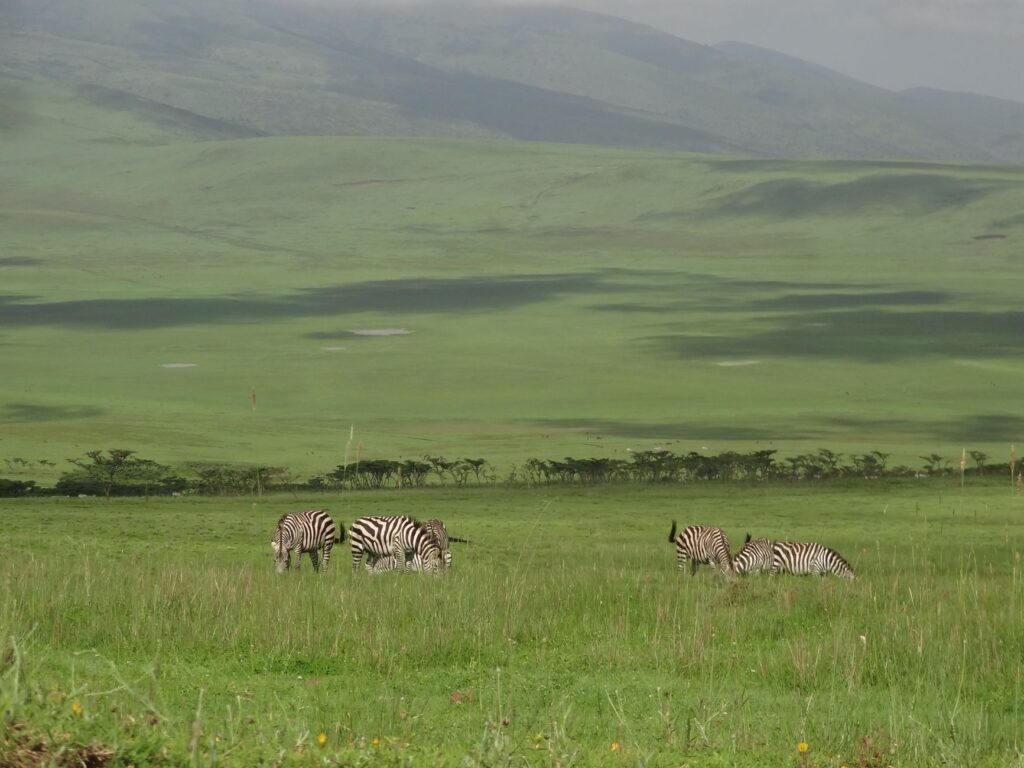
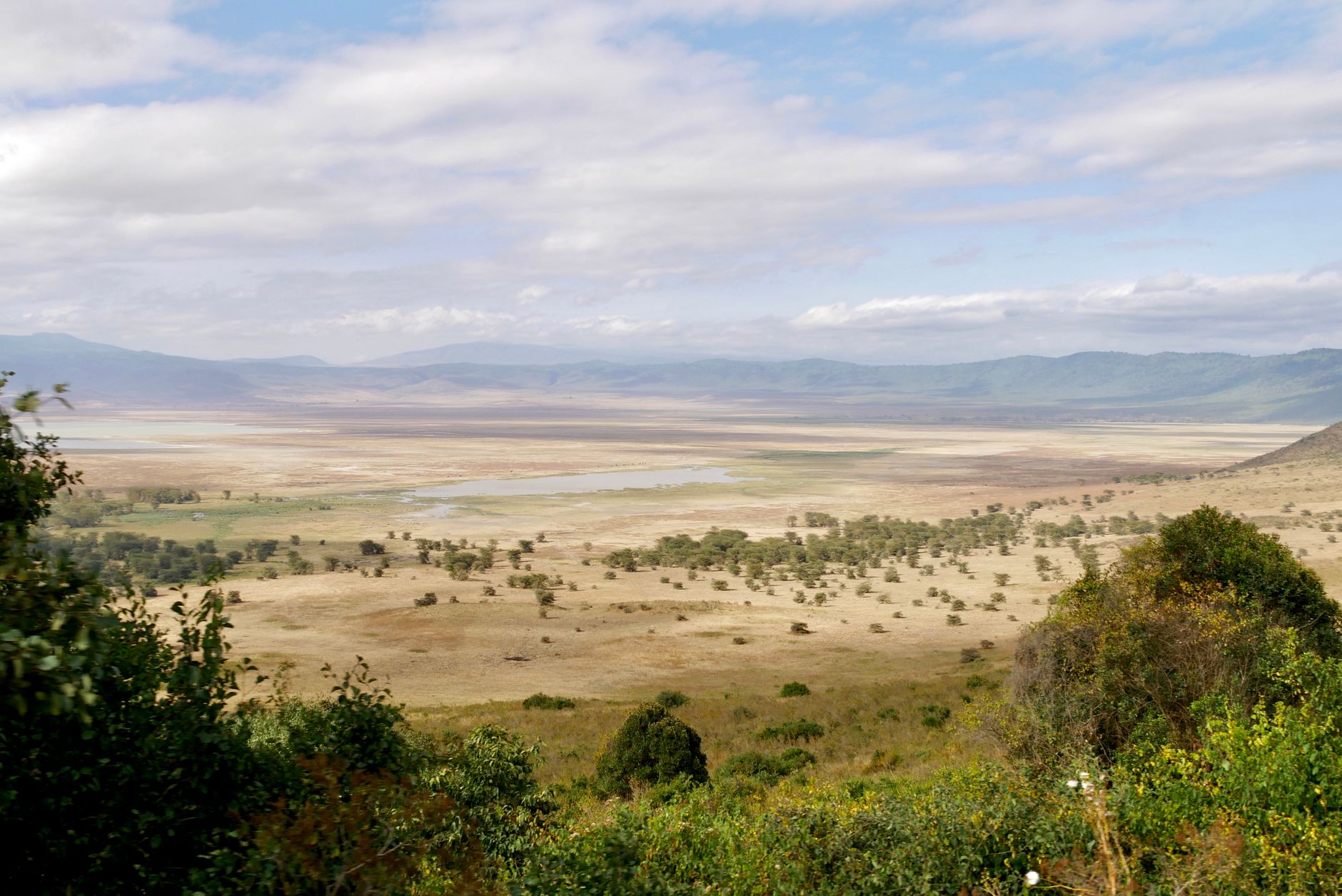
The park holds one of the highest densities of giraffe anywhere on the continent — several hundred animals in an area a fraction of the size of the parks further west — alongside zebra, warthog and Cape buffalo on the open ground around Ngurdoto Crater, sometimes called the “little Ngorongoro” for its steep forested walls and swamp-filled floor, though vehicles stay on the rim and never descend into it. To the north, the seven shallow Momella Lakes vary in colour from lake to lake depending on their algae and mineral content, and their shallows draw flamingo, pelican and a long list of waterbirds against a backdrop of Mount Meru.

Momella Lakes and flamingos

One of the few parks you can walk in

Most Tanzanian national parks restrict visitors to vehicles, but Arusha National Park is a rare exception: guided walking safaris with an armed ranger are permitted across much of the lower park, and canoeing on the Momella Lakes is offered as well — a genuinely different way to close in on buffalo and giraffe at the waterline. The park is also the starting point for treks up Mount Meru, Tanzania’s second-highest peak at 4,566 metres, a four-day climb that serves many people as acclimatisation before an attempt on Kilimanjaro and, on a clear day from the upper slopes, offers one of the best views of Kilimanjaro itself.

Why it is usually a half-day, not a full safari

Because it sits so close to Arusha and covers so little ground, most visitors treat it as a morning or afternoon addition rather than a standalone safari — either on arrival before heading out to Tarangire and the rest of the circuit, or as a gentle final outing before flying home. Predator numbers are low compared with the Serengeti or Ngorongoro, and that is rather the point: this is a park for walking, canoeing and giraffe, not for big cats.

In the field

What it looks like

0 Safaris visit here
0 Trek route climbs it
Up close

Highlights, up close

Mount Meru trailheadMomella Lakes and flamingosNgurdoto Crater viewpointsGuided walking safaris permittedBlack-and-white colobus monkeys Plan your trip here
On the map

Where it is

  • Best time to visit June to October and January to February
  • Climate Wetter and cooler than the plains thanks to Meru's slopes — a light waterproof is worth carrying even in the dry season.
In depth Landscape, wildlife, birds & seasons What you might see here, and when conditions are best.
The terrain

Landscape & vegetation

Open acacia savanna and swamp around Ngurdoto Crater, montane rainforest on Meru's lower slopes, and shallow alkaline lakeshore at Momella.

Wildlife

What you might see

A seasonal reference guide, not a live sighting feed or a guarantee — wildlife moves. Tap or hover a ring for a quick note.

  • Giraffe Excellent chance Near-certain on most visits to this area.
  • Cape buffalo Excellent chance Near-certain on most visits to this area.
  • Black-and-white colobus Good chance Spotted on the large majority of game drives here.
  • Warthog Good chance Spotted on the large majority of game drives here.
  • Lesser flamingo Seasonal Depends on the time of year — ask about timing when you enquire.
  • Leopard Rare A genuine bonus sighting if it happens — never guaranteed.
Birdlife

Notable birds

Lesser flamingo ◆ Pink-backed pelican ◆ Silvery-cheeked hornbill ◆ Crowned eagle

Right now: this list is at its fullest. Resident species are here year-round, and this is also the window (roughly October to March) when migratory birds visiting from Europe and Asia add to the count.

When to go

Seasonal climate guide

Typical conditions across the Northern Circuit by season — a reference guide based on long-term patterns, not a live forecast.

Short dry spell
Jan – Feb
Temp.25–30°C
RainfallLow
Long rains
Mar – May
Temp.22–28°C
RainfallHigh
Dry season
Jun – Oct
Temp.20–27°C
RainfallVery low
Short rains
Nov – Dec
Temp.23–29°C
RainfallModerate
Before you travel What to carry, health precautions & emergency numbers Packing list, vaccinations, and who to call if you need help.
Pack for it

What to carry

  • Neutral-coloured clothing (khaki, olive, brown) — avoid bright white, black and blue, which attract tsetse flies
  • A warm layer or fleece — early-morning game drives and the Ngorongoro rim are cold even on the equator
  • Wide-brimmed hat and polarised sunglasses
  • High-SPF sunscreen and lip balm
  • Insect repellent (DEET-based, for dusk and dawn)
  • Binoculars — one pair per person makes a real difference
  • A power bank and universal adapter (Tanzania uses UK-style Type G plugs)
  • A soft-sided duffel bag rather than a hard suitcase, for light-aircraft and 4x4 luggage limits
  • A basic personal first-aid kit and any personal medication in hand luggage
  • Cash in US dollars (2013 or newer notes) for tips and small purchases
Stay well

Health precautions

Malaria

Northern Tanzania is a malaria risk area. Speak to your doctor or a travel clinic about antimalarial medication well before you travel, and use insect repellent and cover up at dusk and dawn regardless.

Yellow fever certificate

Tanzania requires proof of yellow fever vaccination only if you are arriving from (or have transited more than 12 hours through) a country with risk of yellow fever transmission. If that applies to your routing, carry your International Certificate of Vaccination.

Altitude

The Ngorongoro Crater rim sits above 2,200 m and Kilimanjaro/Meru climbs go much higher — mild headaches or breathlessness are common at altitude. Drink plenty of water, ascend gradually where you can, and tell your guide if you feel unwell.

Sun and hydration

The equatorial sun is stronger than it feels in the open-sided safari vehicles. Drink more water than you think you need, and reapply sunscreen through the day.

Routine vaccinations and travel insurance

Make sure routine vaccinations are up to date, and take out travel insurance that explicitly covers emergency medical evacuation — the parks are remote, and evacuation by light aircraft is the standard response to a serious medical issue.

General guidance only, not personal medical advice — please confirm requirements and recommendations with your own doctor or a travel clinic before you go.

Emergency numbers

Worth saving to your phone before you travel.