
Overview About this route
Lemosho is the best route on Kilimanjaro and the reason is acclimatisation. It approaches from the west, crosses the whole mountain, and the eight-day version gives your body two extra nights to adjust. Summit success on eight-day Lemosho runs well above the shorter routes — the mountain does not get harder, you just arrive better prepared.
Day by day The route
The itinerary
-
Londorossi Gate, then the drive to Lemosho trailhead and a short walk into montane forest to Mti Mkubwa camp (2,780m). This is elephant and buffalo country and a ranger accompanies the first section.
-
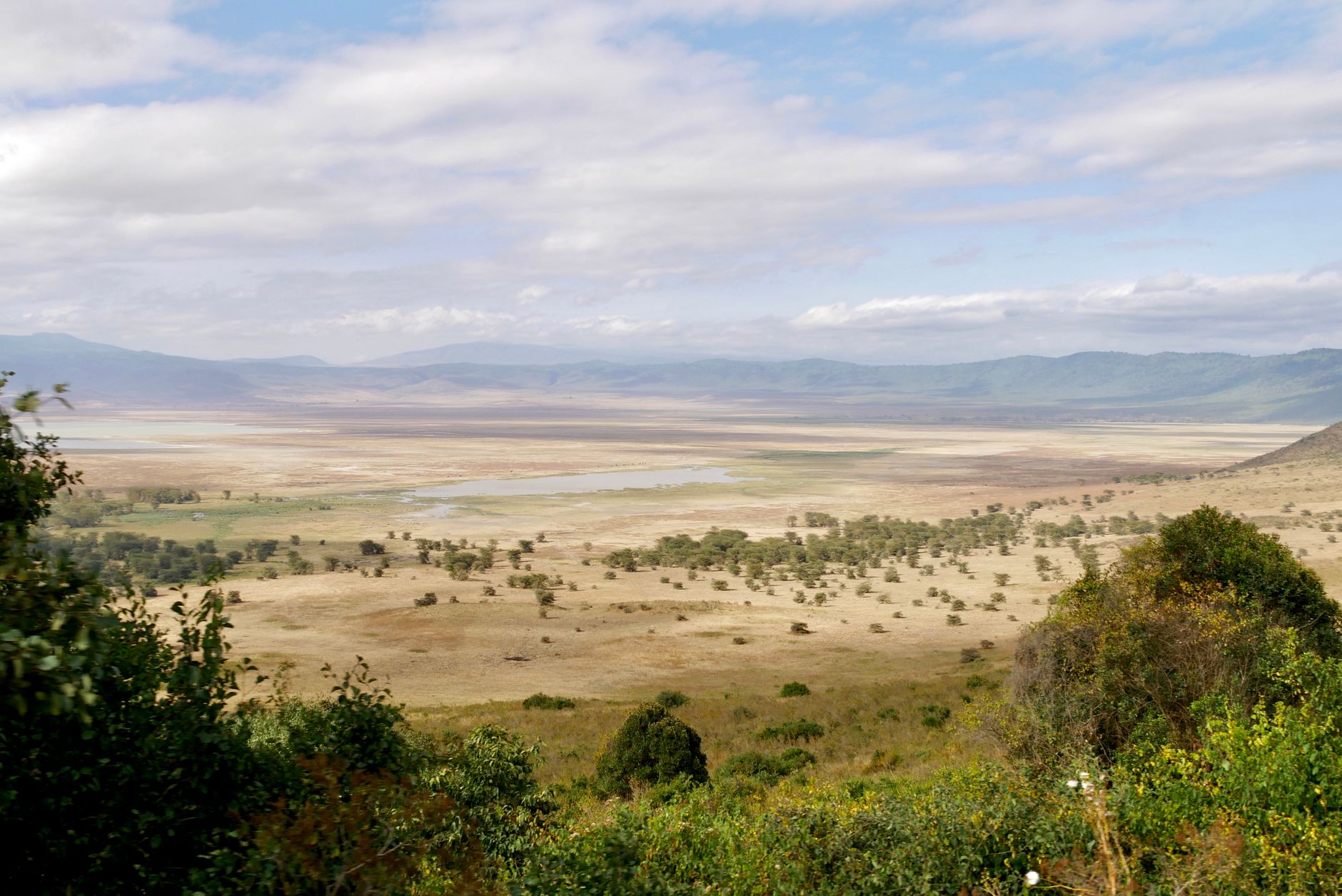
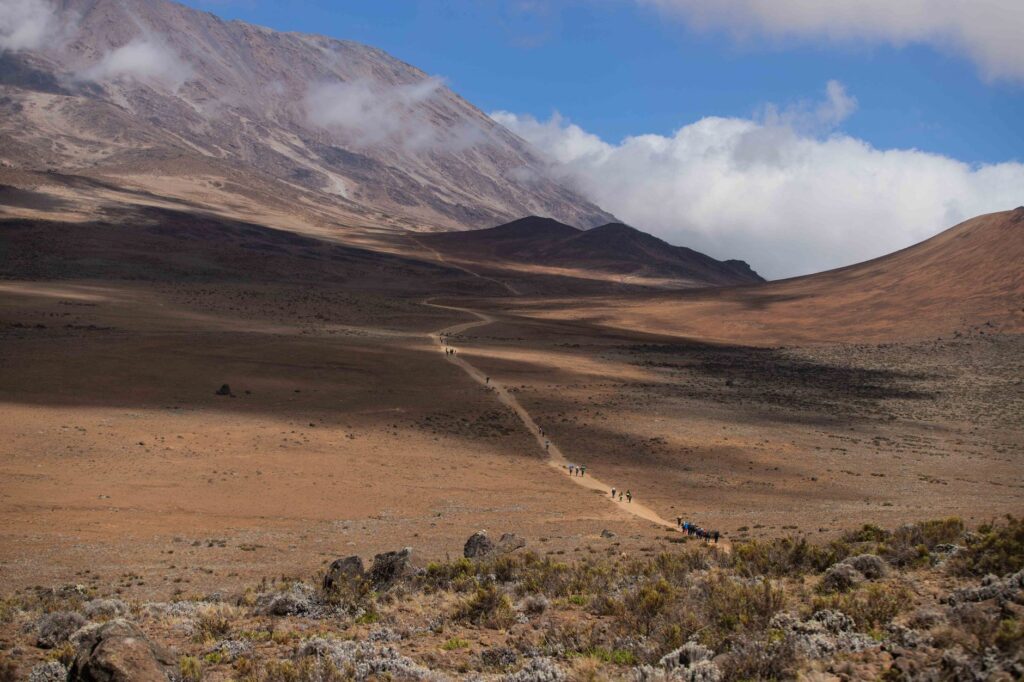
Out of the forest onto the Shira Plateau — a high moorland shelf that is the floor of an old collapsed crater. Camp at Shira 1 (3,505m). The vegetation changes completely: giant heather, everlastings, and the first view of Kibo’s ice.
-
A gentle day by design, with an afternoon acclimatisation walk. The plateau is one of the strangest landscapes on the mountain — flat, open, high, with Kibo filling the eastern sky.
-
The big acclimatisation day. You climb to Lava Tower at 4,630m, eat lunch there, then descend to Barranco camp at 3,960m. Climbing high and sleeping low is the single most effective acclimatisation tool available, and this is the day that makes Lemosho work. Many people feel rough at Lava Tower; almost all feel fine again by Barranco.
-
The Barranco Wall — a 257-metre scramble that looks impossible from below and is not. It is hands-on in places but not technical, and the exposure is short. Over the top, then across the Karanga valley to Karanga camp (3,995m). The eight-day itinerary sleeps here; shorter versions push straight through, which is precisely where they lose people.
-
Barafu means “ice”. You arrive early, eat, and sleep in the afternoon because you are getting up at midnight.
-
Summit day. Wake around 23:30, on the trail by midnight. Six to seven hours of switchbacks on scree in the dark and the cold — it is routinely −10°C or below with wind. You reach Stella Point (5,756m) around sunrise, then the crater rim walk to Uhuru Peak, 5,895m, the highest point in Africa.
Then all the way down to Mweka camp (3,100m). It is the longest, hardest day of your life for most people: fourteen to sixteen hours on your feet.
-
Descend through forest to Mweka Gate, certificates, and transfer to Moshi. A shower and a bed.
What it takes: no technical skill, no ropes, no prior altitude experience required — but genuine fitness and a real tolerance for discomfort. Train by walking hills with a pack.
What is included: park fees, hut/camping fees, rescue fees, all crew wages at or above the legal minimum, meals, and group equipment. Ask any operator quoting significantly less exactly which of those they have cut, because one of them will be the porters.
Some history, because it changes how the mountain feels
Kilimanjaro was first summited on 6 October 1889 by Hans Meyer, a German geographer, and Ludwig Purtscheller, an Austrian alpinist. It was Meyer’s third attempt — in 1887 he reached about 5,500m and was turned back by the ice, having brought no equipment for it, and in 1888 a local uprising ended the expedition before it began.
The detail most operators leave out is the third man. Their guide was Yohani Kinyala Lauwo, a Chagga from Marangu, eighteen years old at the time and reportedly chosen by the local Mangi almost at random. Lauwo had already been up the mountain repeatedly before any European asked him to — by his own account nine times, before he understood there was a crater at the top. He lived until 1996, to somewhere around 125 years old, and was eventually honoured by the Tanzanian government. Johannes’ Notch on the summit route carries his name.
Meyer named the summit Kaiser Wilhelm Peak. It became Uhuru — freedom — at independence in 1961.
The other thing worth knowing before you go: Meyer and Purtscheller crossed extensive ice fields near the top. More than 80% of the ice recorded in 1889 is now gone, and the current estimate is that the remaining glaciers could disappear entirely by around 2040–2050. What you will walk past on summit night is the last of it.
At a glance Summary, facts & pricing The climb in numbers, and what it costs.
Africa's highest summit
Pricing by comfort level
Best season January–March, June–October
$1,862 per person
Best season January–March, June–October
$2,450 per person
Best season January–March, June–October
$3,724 per person
Per person, land only — international flights not included. Final pricing depends on your dates and group size; ask us and we will quote exactly.