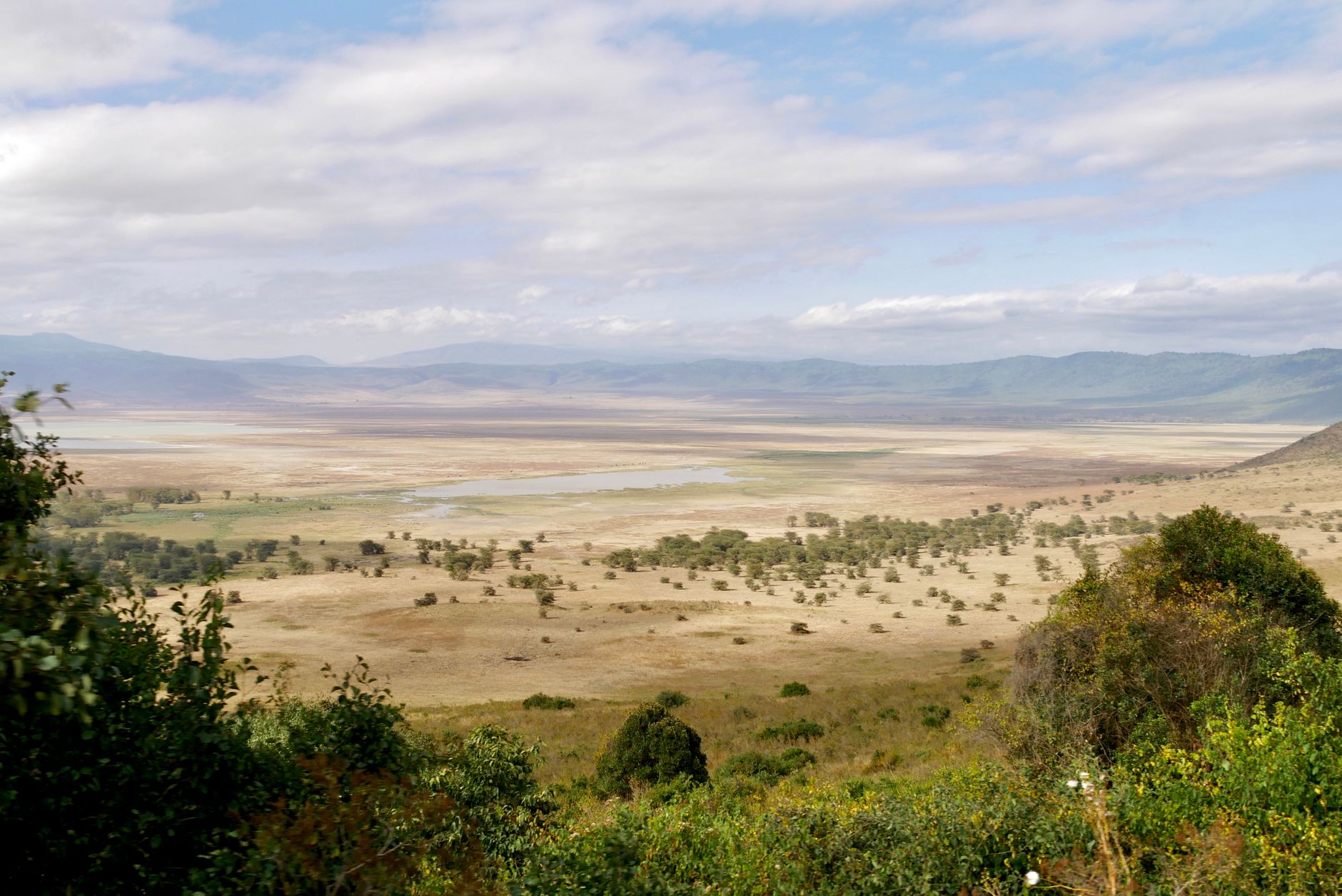

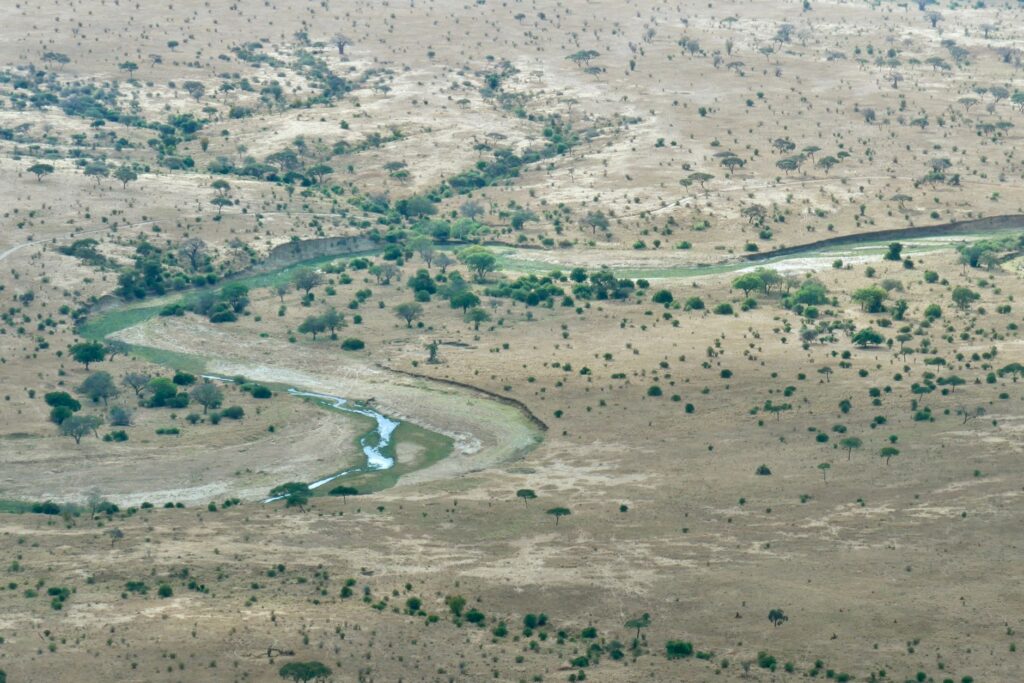
With possibly the greatest concentration of wildlife outside of the Serengeti, Tarangire National Park, a spectacular wilderness renowned for its majestic elephant families and ancient, iconic baobab trees, is one of our favourites. The life-giving Tarangire River serves as an oasis, drawing massive migratory herds of zebra, buffalo, and wildebeest, while offering Tanzania’s exclusive sightings of rare dry-country antelopes like the fringe-eared oryx and long-necked gerenuk.
An absolute paradise for birdwatchers, this vibrant savannah hosts over 500 bird species — the richest breeding habitat on Earth — ranging from the massive Kori bustard to brilliant flocks of endemic yellow-collared lovebirds. Between the dramatic landscape features, sharp-eyed travellers can spot dwarf mongooses inside old termite mounds, pythons draped over branches, and tree-climbing lions or even leopards resting beneath the canopy.
Read on More about this place
Tanzania’s elephant capital
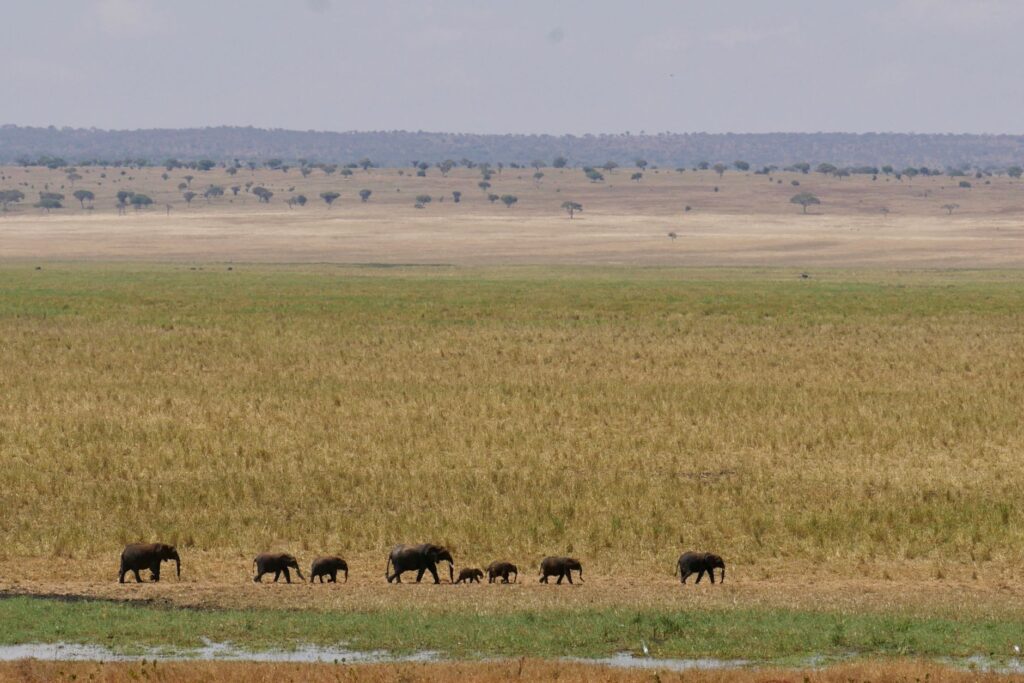
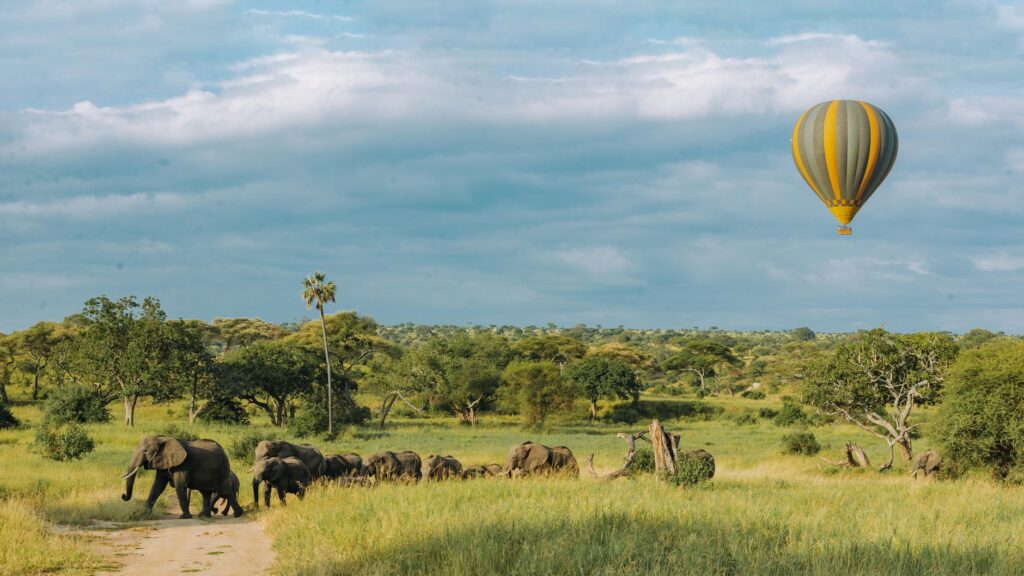
Tarangire covers roughly 2,850 square kilometres of granite ridge, river valley and baobab-studded savanna, about two hours south of Arusha, and holds the highest concentration of elephants anywhere in Tanzania — dry-season estimates run to 3,000 or more animals across the wider ecosystem, in herds that can number in the hundreds. The reason is water: the Tarangire River is the only reliable, permanent water source across a very large stretch of country, and between roughly June and October, when everything else has dried up, wildlife of every kind converges on its banks in numbers that rival the Serengeti at a fraction of the visitor traffic.

Baobabs a thousand years old
Tarangire is often called the baobab park, and the trees are not incidental scenery — individual specimens here can reach ten metres in trunk diameter and thirty metres in height, with some estimated at well over a thousand years old. Scattered across rolling, granite-studded ground, they give Tarangire a visual character unlike any other park on the Northern Circuit, and elephants are frequently seen stripping bark from the trunks for moisture and fibre during the driest months.
Huge elephant herds in dry season
Beyond elephants
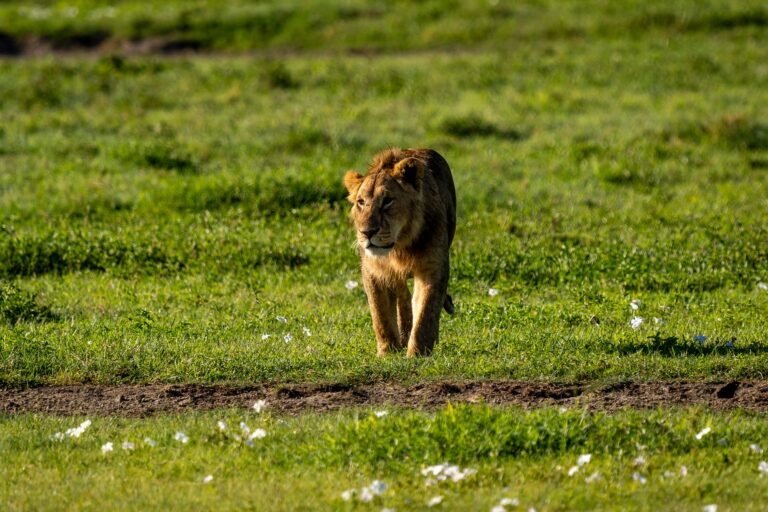
The dry season also concentrates huge herds of zebra, wildebeest and buffalo along the river, drawing lion, leopard and a healthy cheetah population in behind them; lions here are occasionally seen resting up in acacia branches, a behaviour also associated with Lake Manyara. Birders rate Tarangire among the best parks in Tanzania, with more than 550 recorded species including the localised yellow-collared lovebird and, in the wet season from roughly November to May, a strong supporting cast of migrant waders.
Quiet in a way the Serengeti rarely is
Because Tarangire sits slightly off the direct road between Arusha and Ngorongoro, and because most first-time visitors prioritise the Serengeti and the crater, it sees markedly fewer vehicles than either — genuinely quiet game drives are still the norm here even in peak season. Most Northern Circuit itineraries open with Tarangire for exactly this reason: it is an easy first stop out of Arusha, and a gentle, elephant-heavy introduction before the crowds and scale of the Serengeti further west. Our 5-Day Northern Circuit Classic begins here for that reason, as does the longer 8-Day Full Northern Circuit.
At a glance Facts, season & highlights The essentials, and what makes this place.
Tanzania
Giant baobab trees and more elephants than almost anywhere else in Tanzania.
What it looks like

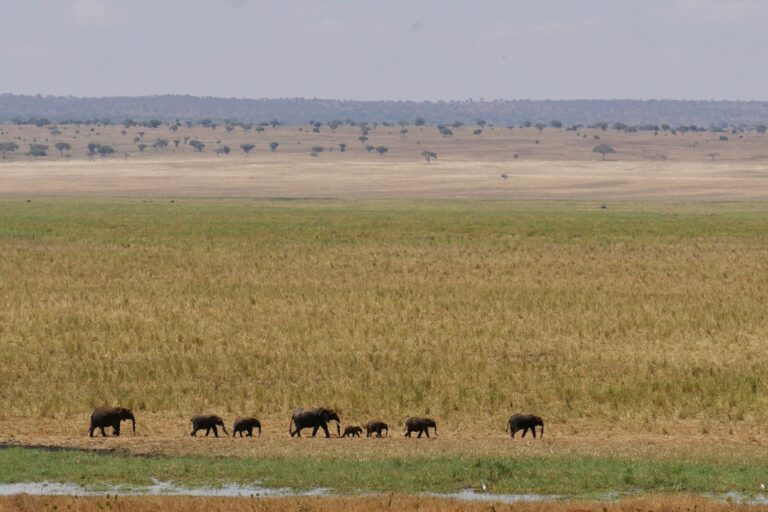

Peak elephant season
The Tarangire River becomes the only reliable water for miles, drawing some of the largest elephant herds anywhere in Africa right along its banks.
Highlights, up close
Where it is
- Best time to visit June to October (dry season)
- Climate Hot and dusty in the June–October dry season, when wildlife concentrates hardest along the river; greener and quieter in the rains.
In depth Landscape, wildlife, birds & seasons What you might see here, and when conditions are best.
Landscape & vegetation
Baobab-studded savanna and granite ridges, with dense riverine forest along the Tarangire River itself.
What you might see
A seasonal reference guide, not a live sighting feed or a guarantee — wildlife moves. Tap or hover a ring for a quick note.
- Elephant Near-certain on most visits to this area.
- Zebra Near-certain on most visits to this area.
- Wildebeest Most visible in the Jun–Oct dry season, when animals concentrate along the Tarangire River.
- Lion Spotted on the large majority of game drives here.
- Leopard Spotted on the large majority of game drives here.
- Cheetah Most visible in the Jun–Oct dry season, when animals concentrate along the Tarangire River.
- Cape buffalo Spotted on the large majority of game drives here.
Notable birds
Yellow-collared lovebird ◆ Kori bustard ◆ Ashy starling ◆ Northern white-crowned shrike
Right now: this list is at its fullest. Resident species are here year-round, and this is also the window (roughly October to March) when migratory birds visiting from Europe and Asia add to the count.
Seasonal climate guide
Typical conditions across the Northern Circuit by season — a reference guide based on long-term patterns, not a live forecast.
In pictures Photo gallery
A closer look
Nearby Treks & safaris that come here
Safaris that visit here



Before you travel What to carry, health precautions & emergency numbers Packing list, vaccinations, and who to call if you need help.
What to carry
- Neutral-coloured clothing (khaki, olive, brown) — avoid bright white, black and blue, which attract tsetse flies
- A warm layer or fleece — early-morning game drives and the Ngorongoro rim are cold even on the equator
- Wide-brimmed hat and polarised sunglasses
- High-SPF sunscreen and lip balm
- Insect repellent (DEET-based, for dusk and dawn)
- Binoculars — one pair per person makes a real difference
- A power bank and universal adapter (Tanzania uses UK-style Type G plugs)
- A soft-sided duffel bag rather than a hard suitcase, for light-aircraft and 4x4 luggage limits
- A basic personal first-aid kit and any personal medication in hand luggage
- Cash in US dollars (2013 or newer notes) for tips and small purchases
Health precautions
Malaria
Northern Tanzania is a malaria risk area. Speak to your doctor or a travel clinic about antimalarial medication well before you travel, and use insect repellent and cover up at dusk and dawn regardless.
Yellow fever certificate
Tanzania requires proof of yellow fever vaccination only if you are arriving from (or have transited more than 12 hours through) a country with risk of yellow fever transmission. If that applies to your routing, carry your International Certificate of Vaccination.
Altitude
The Ngorongoro Crater rim sits above 2,200 m and Kilimanjaro/Meru climbs go much higher — mild headaches or breathlessness are common at altitude. Drink plenty of water, ascend gradually where you can, and tell your guide if you feel unwell.
Sun and hydration
The equatorial sun is stronger than it feels in the open-sided safari vehicles. Drink more water than you think you need, and reapply sunscreen through the day.
Routine vaccinations and travel insurance
Make sure routine vaccinations are up to date, and take out travel insurance that explicitly covers emergency medical evacuation — the parks are remote, and evacuation by light aircraft is the standard response to a serious medical issue.
General guidance only, not personal medical advice — please confirm requirements and recommendations with your own doctor or a travel clinic before you go.
Emergency numbers
Worth saving to your phone before you travel.
- Chanua Africa Safaris (24/7 on safari) +255 702 345 991
- Tanzania Police (emergency) 112
- Ambulance 115
- AMREF Flying Doctors (air evacuation) +255 683 116 000