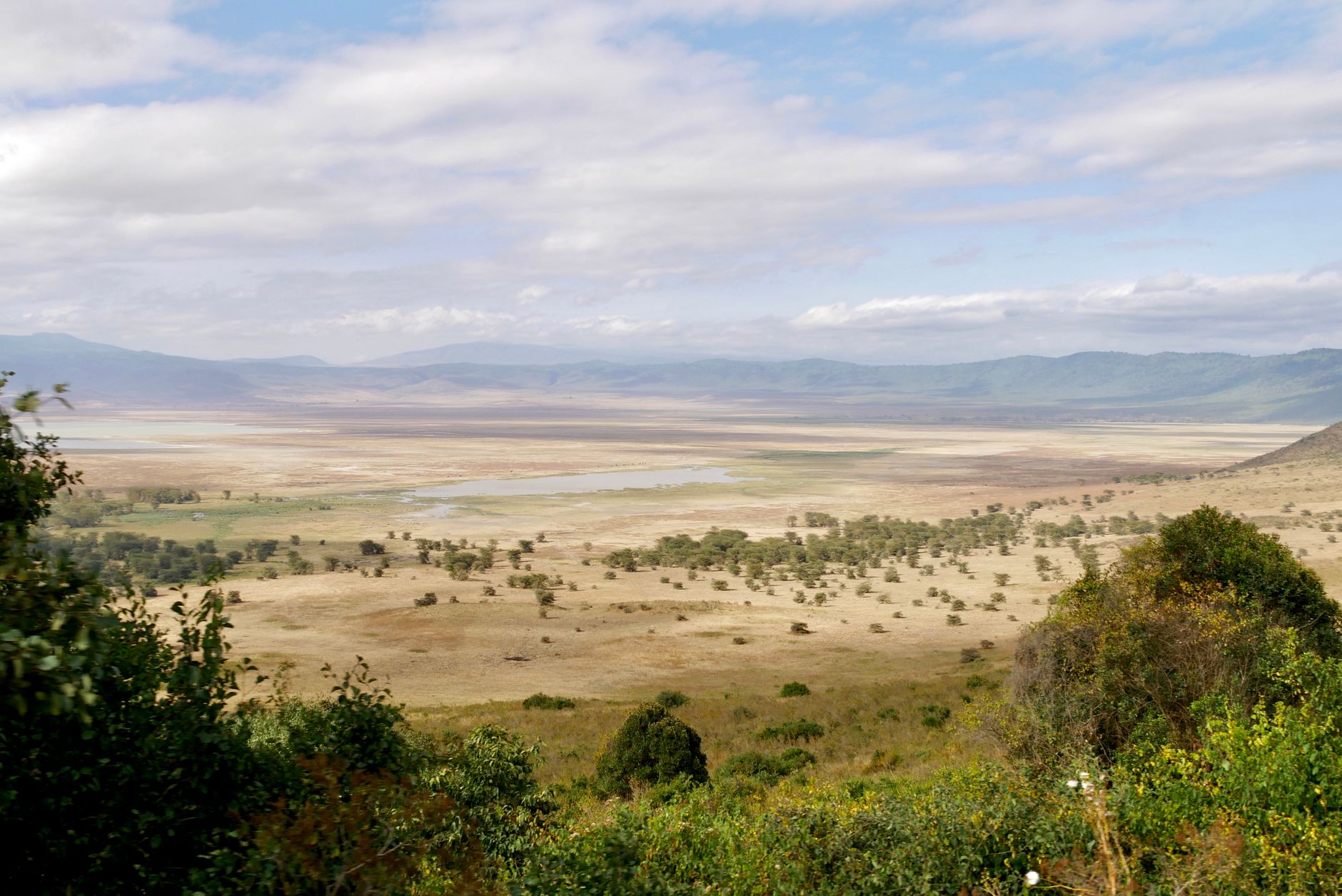

Day 1 — Dar es Salaam to Bagamoyo. Roughly two hours north. Afternoon walking the old town: the Caravan Serai, the Catholic Mission museum, the Old Church where Livingstone’s body lay.
Day 2 — Bagamoyo to Saadani. Transfer north to the coast park. Afternoon game drive where the bush meets the Indian Ocean.
Day 3 — Saadani. Morning boat safari up the Wami River for hippo, crocodile and mangrove birdlife. Afternoon on the beach, or a guided walk.
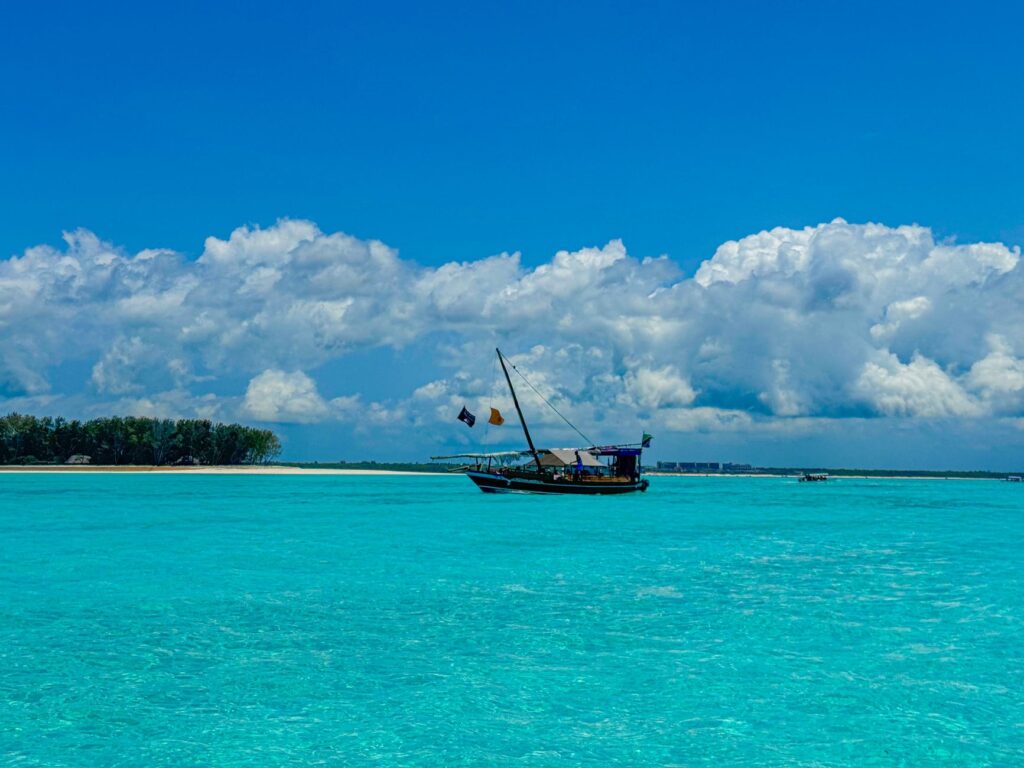
Day 4 — Saadani to Zanzibar. Boat or short flight across. Afternoon in Stone Town.
Day 5 — Stone Town and spices. Guided walk through the old quarter, the former slave market and Anglican cathedral, then a spice farm in the afternoon.
Day 6 — Departure. Free morning, transfer to Zanzibar airport.
Pricing by comfort level
Best season June–October and December–February
$665 per person
Best season June–October and December–February
$1,655 per person
Best season June–October and December–February
$3,410 per person
Per person, land only — international flights not included. Final pricing depends on your dates and group size; ask us and we will quote exactly.
Windier, good for kitesurfing
The kusi monsoon picks up, bringing more wind and a choppier sea on the east coast — excellent for kitesurfing, a little more marginal for swimming at low tide.
Highlights, up close
The route
- Duration 6 days
- Best months June–October and December–February
- Vehicle 4x4 Toyota Land Cruiser with pop-up roof hatch, guaranteed window seat, and a cool-box for drinking water

The detail What's included & what's not The full list, so there are no surprises.
What's included
Included
- All park and conservation area entry fees
- Private 4x4 safari vehicle with English-speaking driver-guide
- Accommodation as specified (camping, lodge or luxury tier)
- All meals while on safari (full board)
- Drinking water in the vehicle
- Airport/hotel transfers in Arusha or Moshi
- Government taxes and levies
Not included
- International flights
- Tanzania visa
- Travel and medical evacuation insurance
- Tips for your driver-guide and camp/lodge staff
- Alcoholic and premium bottled drinks
- Optional activities (hot air balloon, cultural visits not listed as included)
- Personal expenses and souvenirs
Before you travel What to carry, health precautions & emergency numbers Packing list, vaccinations, and who to call if you need help.
What to carry
- Neutral-coloured clothing (khaki, olive, brown) — avoid bright white, black and blue, which attract tsetse flies
- A warm layer or fleece — early-morning game drives and the Ngorongoro rim are cold even on the equator
- Wide-brimmed hat and polarised sunglasses
- High-SPF sunscreen and lip balm
- Insect repellent (DEET-based, for dusk and dawn)
- Binoculars — one pair per person makes a real difference
- A power bank and universal adapter (Tanzania uses UK-style Type G plugs)
- A soft-sided duffel bag rather than a hard suitcase, for light-aircraft and 4x4 luggage limits
- A basic personal first-aid kit and any personal medication in hand luggage
- Cash in US dollars (2013 or newer notes) for tips and small purchases
Health precautions
Malaria
Northern Tanzania is a malaria risk area. Speak to your doctor or a travel clinic about antimalarial medication well before you travel, and use insect repellent and cover up at dusk and dawn regardless.
Yellow fever certificate
Tanzania requires proof of yellow fever vaccination only if you are arriving from (or have transited more than 12 hours through) a country with risk of yellow fever transmission. If that applies to your routing, carry your International Certificate of Vaccination.
Altitude
The Ngorongoro Crater rim sits above 2,200 m and Kilimanjaro/Meru climbs go much higher — mild headaches or breathlessness are common at altitude. Drink plenty of water, ascend gradually where you can, and tell your guide if you feel unwell.
Sun and hydration
The equatorial sun is stronger than it feels in the open-sided safari vehicles. Drink more water than you think you need, and reapply sunscreen through the day.
Routine vaccinations and travel insurance
Make sure routine vaccinations are up to date, and take out travel insurance that explicitly covers emergency medical evacuation — the parks are remote, and evacuation by light aircraft is the standard response to a serious medical issue.
General guidance only, not personal medical advice — please confirm requirements and recommendations with your own doctor or a travel clinic before you go.
Emergency numbers
Worth saving to your phone before you travel.
- Chanua Africa Safaris (24/7 on safari) +255 702 345 991
- Tanzania Police (emergency) 112
- Ambulance 115
- AMREF Flying Doctors (air evacuation) +255 683 116 000